





What's Happening?
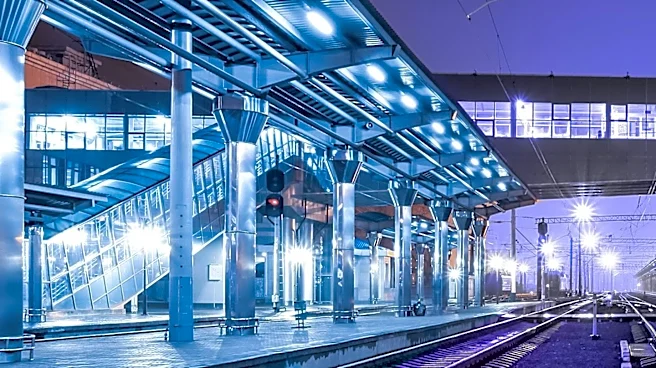
The Federal Railroad Administration (FRA) has awarded a $48 million grant to relocate Portland's Amtrak station to a site near Mercy Hospital. This move is primarily aimed at reducing Amtrak Downeaster service run times to Portland and Brunswick by 15
minutes, a significant factor for the competitive Maine-to-Boston route. The current station's location on a branch line, the Mountain Division, requires trains to back out before continuing their journeys, causing delays. The Northern New England Passenger Rail Authority (NNEPRA), which manages the Downeaster service, views this relocation as a key step. While the Portland City Council initially preferred a different location, they appear to be aligning with the current plan. This development comes amidst growing popular demand for expanded passenger and freight rail services across Maine, with studies suggesting substantial economic benefits and public support for such expansions.
Why It's Important?
This federal grant and station relocation are important for Maine's transportation infrastructure and economic development. Shaving 15 minutes off travel times can significantly enhance the competitiveness of rail service, potentially increasing ridership and making rail a more attractive option for commuters and tourists. The project also highlights a broader debate within Maine regarding the future of its extensive rail network. While the state Department of Transportation (DOT) has historically shown limited interest in expanding rail services beyond current operations, advocates argue that a more balanced transportation system, including rail, could combat climate change, boost tourism, provide affordable housing solutions, and alleviate highway congestion. The success of the Downeaster, which continues to set ridership records, underscores the potential for further rail expansion to benefit the state's economy and quality of life.
What's Next?
The immediate next step involves the relocation of the Portland Amtrak station, funded by the $48 million FRA grant. This project is expected to improve existing Downeaster service efficiency. Beyond this, the future of rail expansion in Maine hinges on a shift in state policy and leadership. With a new administration anticipated next year, there's hope among rail advocates that a more receptive approach to rail and other public transportation initiatives will emerge. This could lead to further studies and potential implementation of extensions to cities like Lewiston, Waterville, and Bangor, which a 2025 study by the Rail Passengers Association estimated could generate $61.7 million in annual statewide benefits. The Cumberland & Knox Railroad's acquisition of passenger coaches for the state-owned Rockland Branch also signals potential for resumed coastal passenger service.
Beyond the Headlines
The discussion surrounding Maine's rail future extends beyond mere transportation logistics to broader societal and environmental considerations. Globally, rail transportation is recognized as a crucial tool for combating climate change, reducing reliance on fossil fuels, and fostering sustainable urban development by enabling affordable housing without extensive car infrastructure. In Maine, a more robust rail network could connect disparate parts of the state, offering alternatives to car ownership, especially for younger generations. The resistance from the state DOT to expand rail, despite public demand and the success of existing services, points to a deeper institutional inertia. Overcoming this inertia could unlock significant economic, environmental, and social benefits, transforming Maine's transportation landscape and aligning it with global trends towards sustainable mobility.