



What's Happening?
Recent research has highlighted the addictive nature of social media platforms for teenagers, with a focus on how these platforms could be redesigned to be less addictive. A study involving 11- and 12-year-olds revealed that a significant percentage of these young
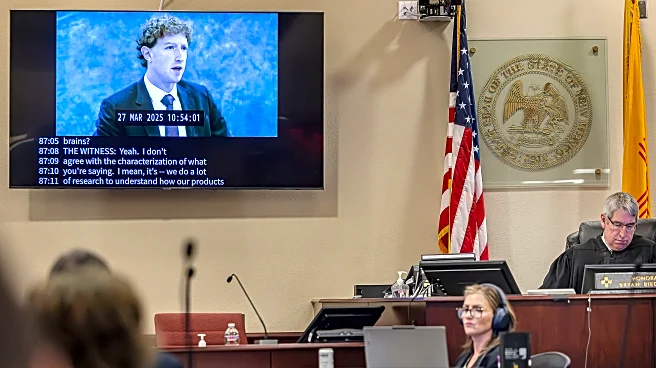
users exhibit behaviors akin to addiction, such as withdrawal symptoms and compulsive use. The study, led by Dr. Jason Nagata from the University of California San Francisco, found that 16% of participants tried but failed to reduce their social media use, while 23% spent considerable time thinking about their apps. These findings are supported by recent court verdicts in California and New Mexico, which held companies like Google and Meta accountable for the mental health impacts of their platforms on young users. Researchers suggest that social media companies could implement changes such as reducing notifications and altering design elements to make platforms less compelling for teens.
Why It's Important?
The implications of this research are significant for both public health and the tech industry. Social media addiction among teens is linked to various mental health issues, including depression, attention problems, and even suicidal behaviors. The findings underscore the need for regulatory measures to protect minors from the potentially harmful effects of social media. The Kids Online Safety Act, which proposes design changes to limit addictive features, is one such measure that has been proposed but not yet fully enacted. If implemented, these changes could lead to a safer online environment for young users, potentially reducing the burden on mental health services and improving the overall well-being of teenagers. The tech industry may face increased pressure to prioritize user safety over engagement metrics, which could lead to significant shifts in how social media platforms are designed and operated.
What's Next?
The future may see increased regulatory scrutiny on social media companies to implement changes that protect young users. The Kids Online Safety Act, which includes provisions for limiting notifications and personalized content for minors, could gain traction in legislative bodies. Additionally, there may be a push for more effective age verification processes to prevent underage users from accessing social media platforms. As awareness of the issue grows, parents and educators might also play a more active role in monitoring and managing teens' social media use. The tech industry could respond by developing new tools and features that promote healthier online habits, potentially setting a precedent for global standards in digital safety for minors.