


What's Happening?
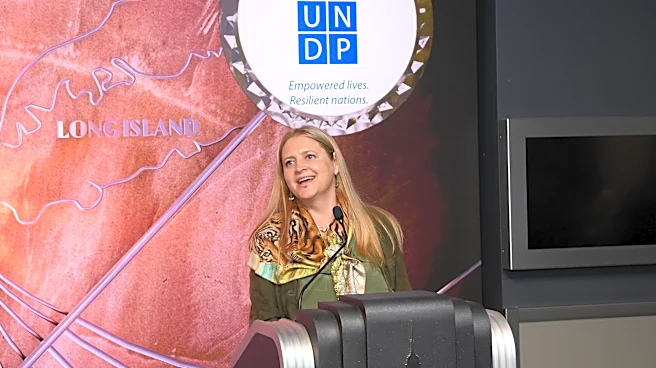
Samantha Power, a prominent figure from the Harvard Kennedy School, recently participated in a discussion alongside Keri Russell and Debora Cahn, the star and creator of the TV series 'The Diplomat.' The conversation focused on drawing parallels between
the acclaimed television series and the realities of the U.S. diplomatic corps and USAID. Russell described the show as 'a love letter to the foreign service,' highlighting its intention to portray the experiences of those working in these fields. Power's own memoir, 'The Education of an Idealist,' served as an inspiration for the show, further bridging the gap between fictional portrayal and real-life diplomatic work. The discussion aimed to shed light on the importance of USAID and the foreign service, acknowledging the dedication and efforts of individuals within these organizations. This event provided a platform to explore the nuances of U.S. foreign policy and the roles of its diplomatic representatives.
Why It's Important?
This discussion is significant as it brings public attention to the often-unseen work of the U.S. diplomatic corps and USAID. By connecting a popular television series with real-world experiences, it helps demystify the complexities of foreign service and international aid for a broader audience. For those within USAID and the foreign service, such recognition can be validating, as the show aims to make them feel 'seen.' This public discourse can foster a greater understanding of the challenges and dedication involved in U.S. foreign policy implementation. It also underscores the influence of media in shaping public perception of governmental institutions and their roles on the global stage. Increased public awareness and appreciation for these critical functions can potentially influence support for diplomatic initiatives and international development efforts, impacting U.S. standing and effectiveness abroad.
What's Next?
The conversation between Samantha Power and the creators of 'The Diplomat' may lead to continued public interest in the U.S. diplomatic corps and USAID. This could manifest in increased viewership for the series, prompting more discussions about the realities of foreign service. Educational institutions and policy think tanks might leverage this popular culture connection to engage students and the public in deeper analyses of U.S. foreign policy and international relations. Furthermore, the visibility gained from such events could encourage more individuals to consider careers in diplomacy or international development, potentially strengthening the talent pool for these critical sectors. The ongoing dialogue could also inspire further media portrayals that accurately reflect the work of these organizations, contributing to a more informed public.
Beyond the Headlines
Beyond the immediate discussion, this event highlights the evolving relationship between popular culture and public understanding of governmental institutions. When a fictional narrative resonates with real-world experiences, it can serve as a powerful tool for public education and engagement. The use of Samantha Power's memoir as inspiration for 'The Diplomat' underscores the impact of personal narratives in shaping broader perceptions of complex fields like diplomacy. This interaction also touches upon the ethical responsibility of media to accurately represent the nuances of public service, avoiding oversimplification or misrepresentation. Such collaborations can foster a more empathetic and informed citizenry, capable of engaging with foreign policy issues beyond superficial headlines and understanding the human element behind international relations.