







What's Happening?
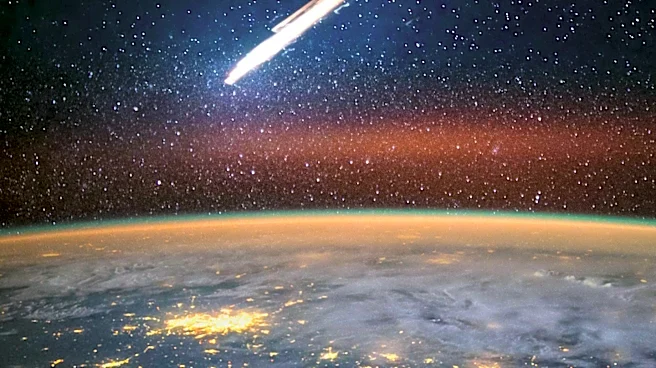
NASA's Neil Gehrels Swift Observatory is expected to undergo a fiery re-entry into Earth's atmosphere this week, nearly 22 years after its launch. The 3,200-pound spacecraft, which has been instrumental in studying gamma-ray bursts and other cosmic phenomena,
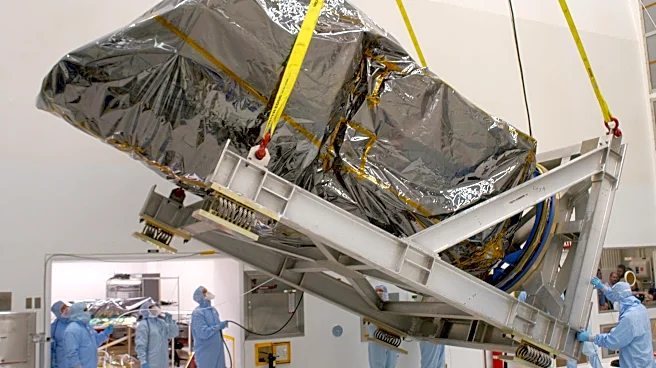
is projected to largely burn up, though some pieces may reach the ground. NASA estimates the risk of harm to anyone on Earth as approximately 1 in 2,100, with potential debris landing in a band encompassing parts of Central and South America, Central Africa, southern India, Southeast Asia, northern Australia, and vast ocean stretches. A last-ditch rescue mission by Arizona-based Katalyst Space Technologies, involving a spacecraft named LINK designed to boost Swift into a stable orbit, failed earlier this year due to orientation control issues. Swift's orbital decay was accelerated by increased solar activity in 2024, intensifying atmospheric drag.
Why It's Important?
The demise of the Swift Observatory marks the end of a highly productive mission that significantly advanced astrophysics, contributing to approximately 7,000 scientific papers. Swift's ability to rapidly pivot and observe transient cosmic events, such as flaring black holes and gamma-ray bursts, made it a crucial 'first-responder' telescope, complementing instruments like the Hubble Space Telescope and James Webb Space Telescope. Its loss creates a gap in observational capabilities, particularly for detecting rare and unusual cosmic events from which scientists often learn the most. This event also highlights the challenges of managing aging space infrastructure and the evolving standards for orbital debris mitigation, as Swift's re-entry risk profile would likely not meet current guidelines if launched today. The observation of Swift's descent could provide valuable data for designing safer satellites in the future.
What's Next?
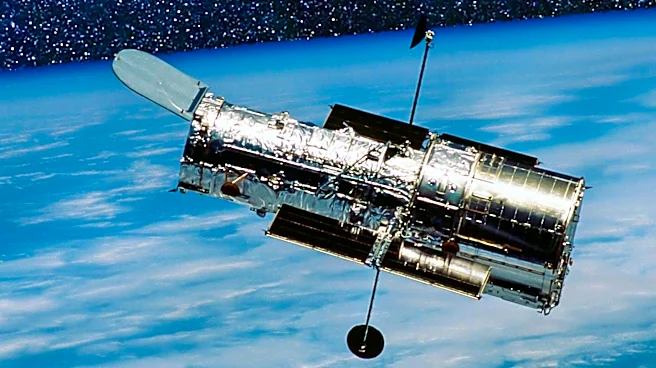
The Swift Observatory is expected to re-enter Earth's atmosphere around November 4. While most of the spacecraft will incinerate, experts will monitor its descent to gather data on re-entering spacecraft, which could inform future satellite design and orbital debris mitigation strategies. Despite its physical end, Swift's extensive archive of scientific data will continue to be a valuable resource for researchers, allowing for new discoveries to be made. NASA is already exploring similar life-extension missions for other valuable space assets, such as the Hubble Space Telescope, indicating a continued commitment to leveraging commercial capabilities for in-space servicing. The lessons learned from Swift's re-entry and the failed rescue attempt will likely influence future policies and technological developments in space operations.
Beyond the Headlines
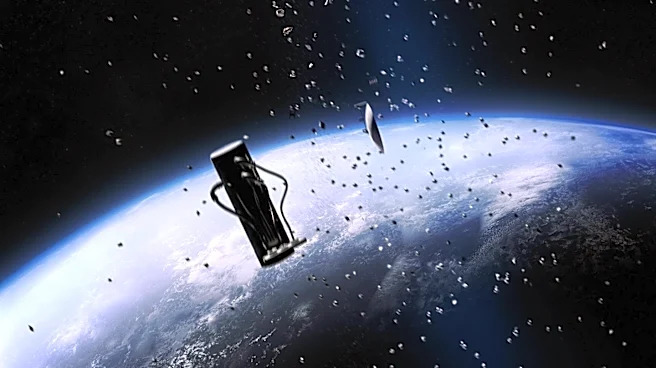
The uncontrolled re-entry of the Swift Observatory raises broader environmental concerns regarding the impact of space debris on Earth's atmosphere. There is an emerging discussion about the potential effects of melted spacecraft materials on the chemistry of the upper atmosphere and the ozone layer, especially as the number of re-entries is projected to increase. This incident underscores the need for comprehensive international guidelines and technological solutions for end-of-life satellite management, moving beyond the current ad-hoc approaches. The failure of the commercial rescue mission also highlights the complexities and risks associated with in-space servicing, emphasizing the need for robust and reliable technologies to ensure the long-term sustainability of space activities and protect both orbital and terrestrial environments.