



What's Happening?
Argentine maritime workers, represented by the country's maritime workers federation FESIMAF, have initiated a 48-hour strike in protest against President Javier Milei's proposed labor reform bill. The strike is affecting cargo vessel operations, particularly
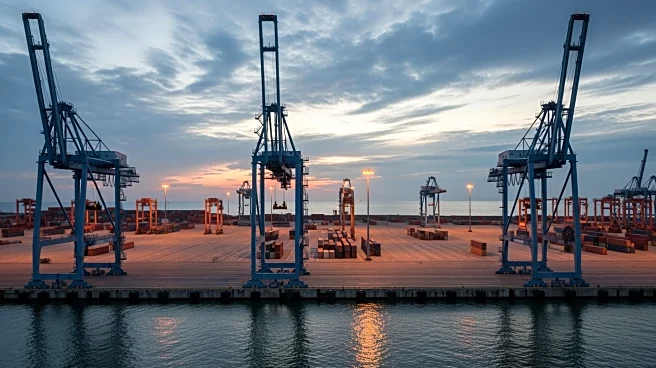
in the port area of Rosario, a major agricultural export hub. The walkout is disrupting cargo loading and unloading, pilot transfers, and other services for commercial vessels. Guillermo Wade, manager of the Chamber of Port and Maritime Activities, noted that the strike is already impacting operations, with ships unable to meet the necessary draft for dispatch. The labor reform bill has faced strong opposition from Argentine unions, who argue that it threatens long-standing worker protections. The Argentine lower house is set to debate the bill following its approval in the Senate.
Why It's Important?
The strike highlights the significant opposition to President Milei's labor reform, which is seen as a threat to worker rights by many unions. The disruption in port operations could have economic repercussions, affecting Argentina's export capabilities and potentially leading to financial losses. The situation underscores the broader tensions between the government and labor unions, which could influence future labor policies and political dynamics in Argentina. The outcome of the legislative debate on the reform bill will be crucial in determining the direction of labor rights and economic policies in the country.
What's Next?
As the Argentine lower house prepares to debate the labor reform bill, the outcome will be closely watched by both domestic and international stakeholders. If the bill passes, it could lead to further strikes and protests from labor unions. Conversely, if the bill is rejected or amended, it may ease tensions but could also impact President Milei's political agenda. The nationwide strike called by the CGT labor federation for Thursday indicates that labor unrest may continue, potentially affecting other sectors and regions. The government's response to the strike and the legislative process will be critical in shaping the future of labor relations in Argentina.