



What's Happening?
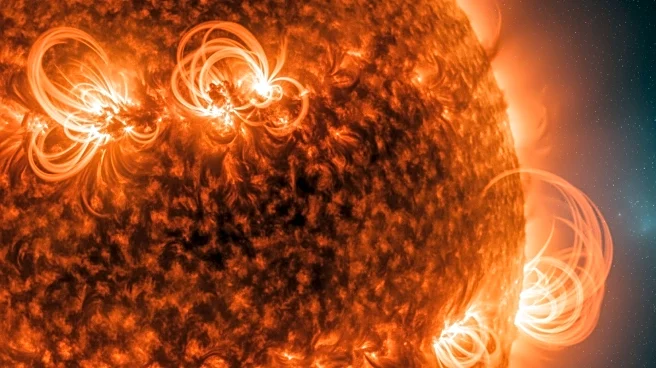
Sunspot AR4274 has released two significant solar flares on consecutive days, classified as X1.7 and X1.2. These flares are among the most powerful types of solar flares, capable of affecting satellite communications and power grids on Earth. The flares were
captured by NASA's Solar Dynamics Observatory, which monitors solar activity. The occurrence of such flares is part of the sun's natural cycle of activity, which can have varying impacts on Earth's space weather environment.
Why It's Important?
Solar flares can have significant effects on Earth, particularly in terms of satellite operations and communication systems. The energy released by these flares can disrupt radio signals and GPS systems, posing challenges for navigation and communication. Additionally, power grids can be affected, leading to potential outages. Understanding and monitoring solar activity is crucial for preparing and mitigating these impacts, especially as society becomes increasingly reliant on technology that can be affected by space weather.
What's Next?
Scientists will continue to monitor sunspot AR4274 and other solar activity to predict future flares and their potential impacts. Space weather forecasts will be updated to inform industries and governments about possible disruptions. Efforts to improve technology resilience against solar flares will be ongoing, ensuring that critical infrastructure can withstand such events.