




What's Happening?
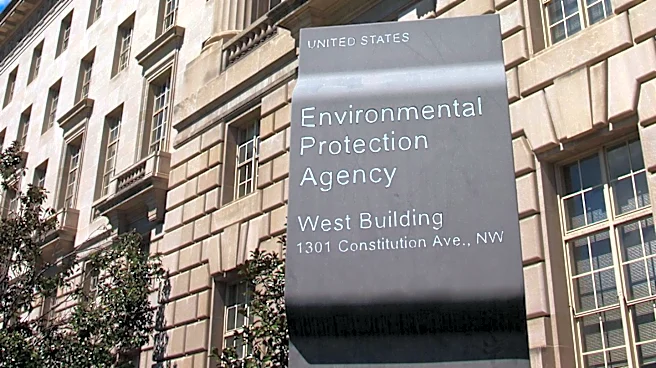
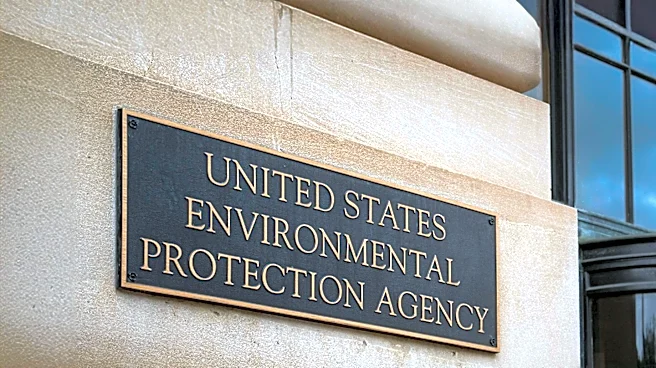
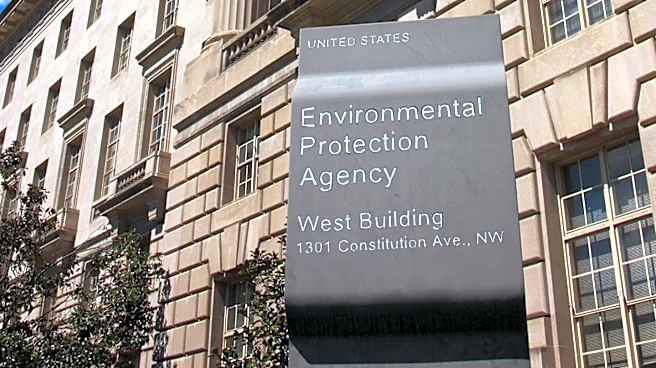
A coalition of environmental and public health organizations has submitted a petition to the U.S. Environmental Protection Agency (EPA), urging a significant revision of the safe drinking water standard for nitrate. The petition calls for the current
maximum contaminant level (MCL) of 10 milligrams per liter (mg/L), established in 1975 and implemented in 1991, to be lowered to 1 mg/L. Petitioners, including Food & Water Watch, Environmental Law & Policy Center, and Environmental Working Group, argue that over 30 years of epidemiological studies link lower levels of nitrate exposure to increased risks of certain cancers, thyroid disease, and adverse birth outcomes. They assert that nitrate contamination, primarily from agricultural sources like manure and commercial fertilizers, constitutes a public health crisis. The EPA has stated it will review the petition and consider newly available scientific studies as part of its next Six-Year Review of drinking water regulations, despite having determined in its 2024 review that the nitrate rule was not a candidate for revision.
Why It's Important?
This petition highlights a critical public health concern regarding drinking water safety across the United States. If the EPA were to adopt the proposed lower standard, it would significantly impact water treatment facilities, agricultural practices, and public health outcomes nationwide. The petitioners' analysis suggests that approximately 120 million people in the U.S. currently have drinking water sources at or above the proposed 1 mg/L standard. Lowering the standard would necessitate substantial investments in water treatment infrastructure and stricter regulations on agricultural runoff, particularly from confined animal feeding operations (CAFOs). The debate also underscores the evolving scientific understanding of contaminants and the need for regulatory standards to keep pace with new research, moving beyond the initial focus on conditions like 'blue baby syndrome' to include broader long-term health risks.
What's Next?
The EPA is obligated to review the petition submitted by the environmental groups. This review will involve evaluating the scientific evidence presented, including over 30 peer-reviewed human health studies and a commissioned benefit-cost analysis. The agency will also consider this petition as it begins its evaluation for the next Six-Year Review of drinking water regulations, where it has committed to deploying 'gold-standard science.' The process could lead to a re-evaluation of the nitrate MCL, potentially triggering new rulemaking. If the standard is lowered, it would likely lead to increased compliance costs for public water systems, particularly in agricultural regions, though petitioners argue that addressing pollution 'at the source' would lower these costs. Legal challenges could also arise depending on the EPA's decision.
Beyond the Headlines
The petition brings to light the systemic issue of agricultural pollution's impact on drinking water quality and the regulatory challenges in addressing it. The long-standing nature of the current nitrate standard, despite accumulating scientific evidence of harm at lower levels, points to potential regulatory inertia or political resistance to stricter environmental controls on agriculture. This situation also highlights the disparity in water quality and access, as many smaller communities struggle to afford nitrate removal systems, and private wells, which are not subject to EPA standards, remain largely unregulated. The call for stricter regulations on fertilizer application and waste management from CAFOs touches upon the broader environmental footprint of industrial agriculture and the need for integrated approaches to water quality management that consider both treatment and source reduction.