






What's Happening?
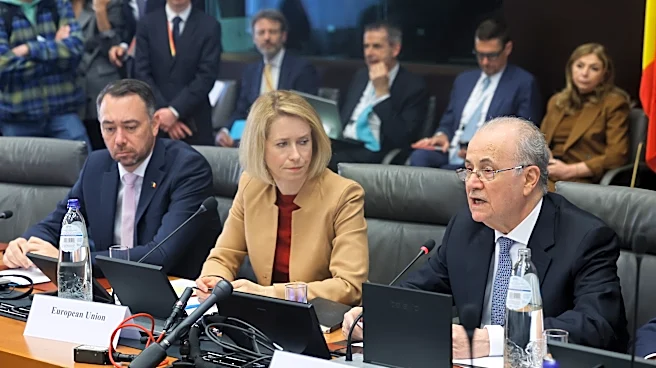
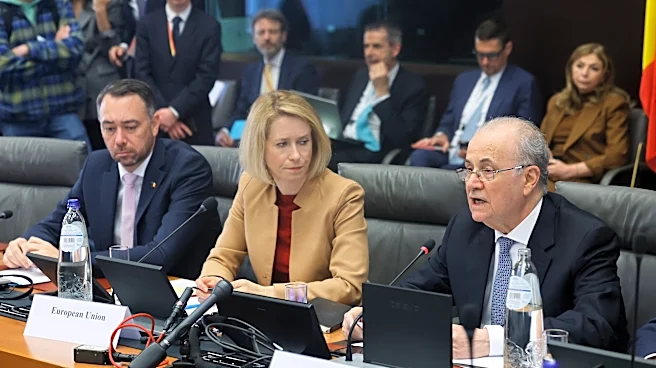
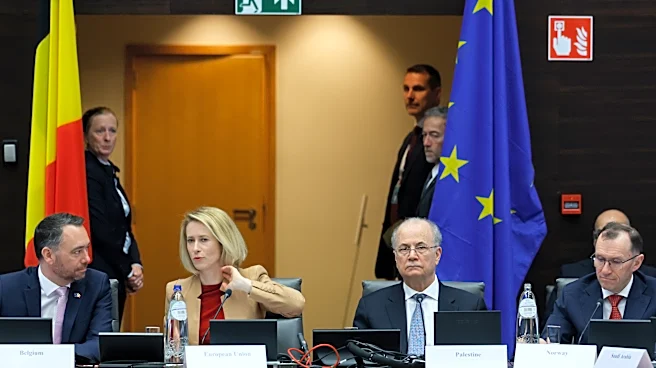
Several European countries, led by Spain and Ireland, have called for the suspension of the EU-Israel Association Agreement due to concerns over Israeli settlement activities in the West Bank, the humanitarian situation in Gaza, and proposed legislation
related to the death penalty. Despite these calls, the EU foreign ministers' meeting in Luxembourg did not result in sufficient support to suspend the agreement. EU foreign policy chief Kaja Kallas noted the lack of consensus among member states, with Germany and Italy opposing the suspension. The agreement, in place since 2000, requires a qualified majority for partial suspension and unanimous approval for a full suspension. The European Commission had previously suggested suspending certain trade-related provisions, affecting significant Israeli exports, but this was rejected by Israel.
Why It's Important?
The division among EU member states highlights the complexities of international diplomacy and the challenges in forming a unified stance on contentious issues like Israeli settlements. The EU is Israel's largest trading partner, and any changes to the agreement could have significant economic implications. The debate also underscores the EU's internal struggles to balance member states' differing foreign policy priorities and the broader geopolitical implications of their decisions. The outcome of these discussions could influence EU-Israel relations and impact the EU's credibility in addressing international human rights concerns.
What's Next?
Discussions on EU-Israel relations are expected to continue, with potential for further diplomatic negotiations. The EU may explore alternative measures, such as targeted sanctions against individuals or entities involved in settlement activities, though these would also require unanimous approval. The evolving political landscape within the EU, including changes in government positions, could affect future decisions. Stakeholders, including human rights organizations and pro-Israel groups, are likely to continue lobbying for their respective positions.