











What's Happening?
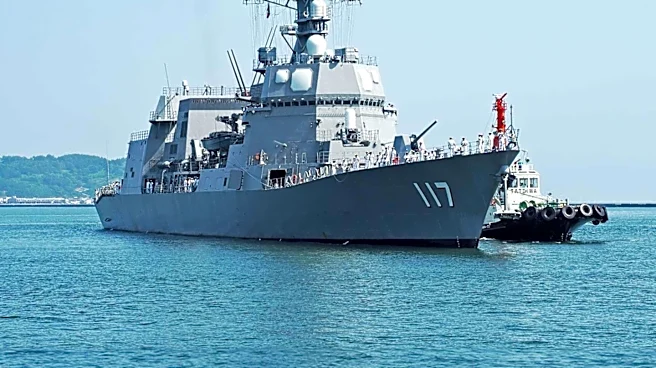
Raytheon Technologies is producing its AN/SPY-6 air and missile defense radar (AMDR) at a pace that exceeds the current shipbuilding rate of the US Navy, according to a report by the US Government Accountability Office (GAO). This production surplus has
resulted in the need to store the radar systems, as there are not enough ships ready for their installation and testing. The AMDR suites are intended for new and upgraded US Navy warships, but delays in shipbuilding have caused a backlog. To address the storage issue, a government-secure facility was established in January 2025 to house both unclassified and classified radar materials. Currently, eight radars and one partial system are stored, with storage costs amounting to $1.6 million annually through 2030. Despite the storage costs, program officials have indicated that it is more cost-effective to store the radars than to halt production.
Why It's Important?
The mismatch between radar production and ship availability highlights significant challenges in defense procurement and logistics. The situation underscores the complexities of synchronizing advanced technology production with military infrastructure development. The storage of these radars, while a temporary solution, incurs additional costs and reflects broader issues in defense planning and execution. The increased costs associated with storage and procurement could impact the overall budget and timeline of the AMDR program, which is already estimated to cost about $20.1 billion, a 15% increase from previous estimates. This development may prompt a reevaluation of procurement strategies and resource allocation within the US Navy and the Department of Defense.
What's Next?
The US Navy and Raytheon Technologies may need to explore alternative strategies to align radar production with shipbuilding schedules more effectively. This could involve adjusting production rates, accelerating ship construction, or finding interim solutions for radar deployment. Additionally, the increased costs and logistical challenges may lead to further scrutiny and potential adjustments in defense procurement policies. Stakeholders, including government officials and defense contractors, will likely engage in discussions to address these issues and ensure that future projects are better coordinated.