
What's Happening?
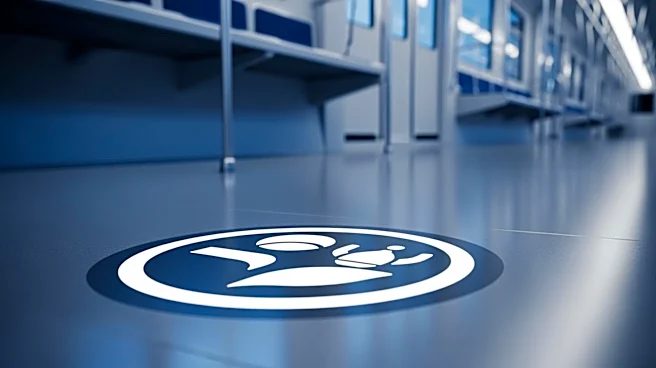
Earnies, a creative agency, launched a campaign to address the challenges faced by pregnant individuals and those with disabilities in securing priority seating on London's Underground. The campaign, led
by creative director Lucy Baker, involved the use of floor stickers to encourage commuters to look up from their phones and offer seats to those in need. The initiative gained significant traction on LinkedIn, generating 750,000 impressions and prompting Transport for London (TfL) to trial the stickers on the Docklands Light Railway (DLR) trains. Additionally, a parody song created by Baker further amplified the campaign's reach, achieving a media coverage reach of 366 million.
Why It's Important?
The campaign highlights the power of creative, low-cost solutions in influencing public policy and behavior. By addressing a common issue faced by vulnerable commuters, Earnies' initiative not only raised awareness but also prompted a tangible response from TfL. This development underscores the potential for grassroots campaigns to effect change in public transportation systems, improving accessibility and inclusivity for pregnant individuals and those with disabilities. The success of the campaign demonstrates the impact of social media in mobilizing public support and pressuring institutions to act.
What's Next?
Following the initial trial of the floor stickers on the DLR trains, TfL may consider expanding the initiative across the entire London Underground network if the trial proves successful. The campaign's viral reach and public support could lead to further discussions on improving accessibility in public transport systems. Stakeholders, including disability advocacy groups and public transport authorities, may engage in dialogue to explore additional measures to enhance commuter experiences for those in need of priority seating.
Beyond the Headlines
The campaign sheds light on broader societal issues related to accessibility and the often-overlooked needs of pregnant individuals and those with disabilities in public spaces. It raises questions about societal norms and the responsibility of individuals to be more aware and considerate of others in shared environments. The initiative also highlights the role of creative industries in driving social change and the potential for innovative, cost-effective solutions to address systemic challenges.