








What's Happening?
The Democratic Republic of Congo (DRC) is experiencing a severe Ebola outbreak, with healthcare facilities overwhelmed and aid responses hindered by various challenges. The outbreak, which is the 17th in the country, has resulted in nearly 750 suspected
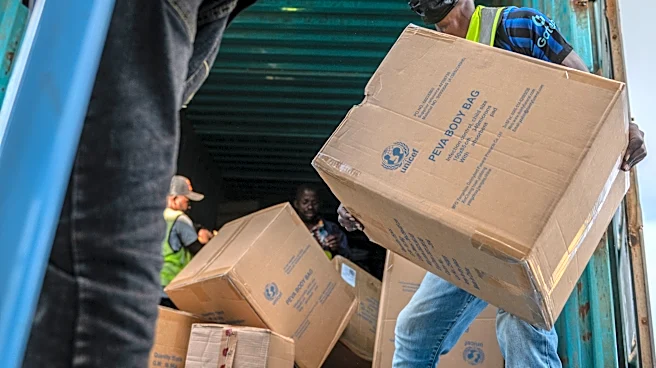
cases and 177 suspected deaths. The virus, which spreads through body fluids, has been exacerbated by local customs and a lack of resources. The Trump administration's decision to cut foreign aid has further strained the response efforts. Health facilities in North and South Kivu provinces have suffered significant damage and staff shortages due to ongoing conflict. The situation is compounded by attacks from militant groups and resistance to safe burial practices, which are crucial for containing the virus. International aid groups and local authorities are calling for coordinated global support to manage the crisis.
Why It's Important?
The Ebola outbreak in the DRC highlights the vulnerabilities of healthcare systems in conflict-affected regions and the critical need for international cooperation in managing health crises. The strain on the DRC's healthcare infrastructure could lead to a wider spread of the virus, posing a threat to regional and global health security. The reduction in foreign aid, particularly from the U.S., underscores the impact of political decisions on humanitarian efforts. The outbreak also raises concerns about the effectiveness of current international aid models and the need for more sustainable and locally-driven solutions. The situation in the DRC serves as a reminder of the interconnectedness of global health and the importance of maintaining robust support systems for vulnerable regions.
What's Next?
Efforts to control the Ebola outbreak in the DRC will require increased international support and coordination. The DRC government, along with international aid organizations, is working to implement measures such as surveillance, contact tracing, and optimized care for patients. The deployment of innovative solutions like portable treatment units is underway to improve patient care and safety. However, overcoming cultural barriers and ensuring compliance with disease-control practices remain significant challenges. The international community's response will be crucial in determining the outbreak's trajectory and preventing further spread. Continued monitoring and adaptation of strategies will be necessary to address the evolving situation effectively.
Beyond the Headlines
The Ebola outbreak in the DRC sheds light on the broader implications of health crises in conflict zones. It highlights the ethical and logistical challenges of balancing cultural practices with public health needs. The situation also raises questions about the long-term sustainability of international aid and the need for more resilient healthcare systems in vulnerable regions. The outbreak could prompt a reevaluation of global health priorities and funding allocations, emphasizing the importance of preparedness and rapid response capabilities. Additionally, the crisis may influence future policy decisions regarding foreign aid and international cooperation in addressing health emergencies.