

What's Happening?
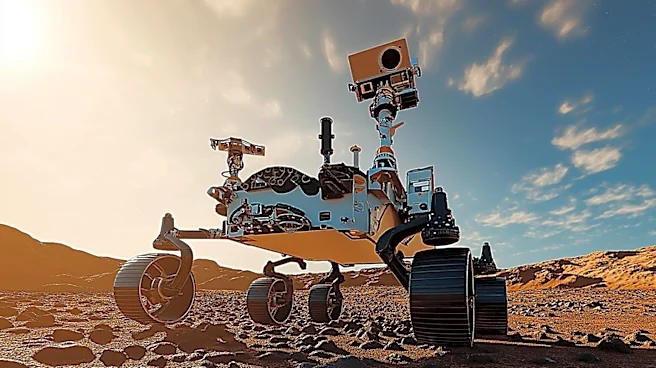
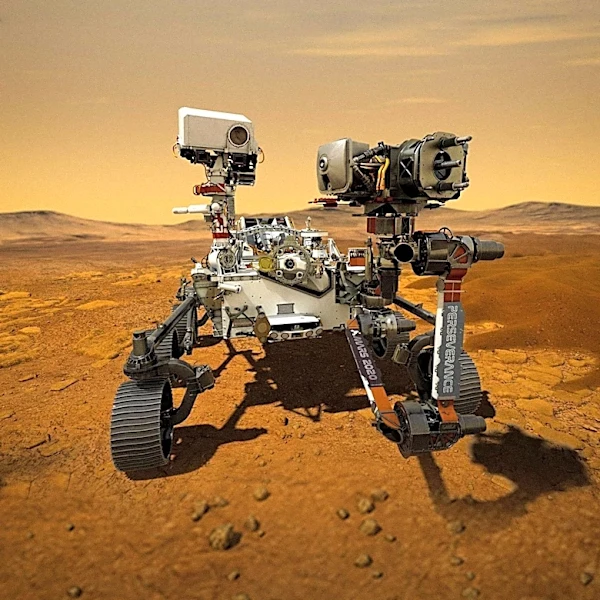
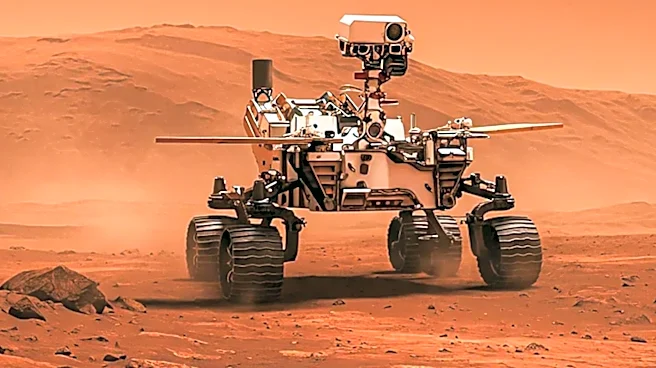
NASA's Perseverance Rover has captured a unique sequence of images showing Earth disappearing behind Mars' moon, Phobos. This event, known as an occultation, was recorded on July 2, 2026, using the rover's Mastcam-Z instrument. The images depict Earth as a small
bright dot moving across the Martian sky, eventually obscured by Phobos. This marks the first time such an observation has been made from the surface of another planet. The event was meticulously planned by NASA scientists, highlighting the rover's advanced imaging capabilities. The observation provides a rare Earth self-portrait from Mars, with Phobos appearing as a lumpy, potato-shaped moon in the foreground.
Why It's Important?
This observation is significant as it demonstrates the advanced capabilities of NASA's Perseverance Rover in capturing celestial events from Mars. The data collected can enhance our understanding of Mars' moons and their interactions with the planet. Additionally, such observations contribute to the broader goals of NASA's Mars Exploration Program, which aims to study the Martian environment and prepare for future human exploration. The ability to capture detailed images of celestial events from Mars also underscores the technological advancements in space exploration, potentially paving the way for more complex missions in the future.
What's Next?
NASA will continue to utilize the Perseverance Rover to capture similar celestial events and gather data on Mars' environment. The rover's ongoing mission includes searching for signs of ancient life and collecting samples for future return to Earth. As the rover continues its exploration, scientists will analyze the data to gain insights into Mars' geological history and its potential to support life. Future missions may build on these findings, furthering our understanding of the Red Planet and its moons.