


What's Happening?
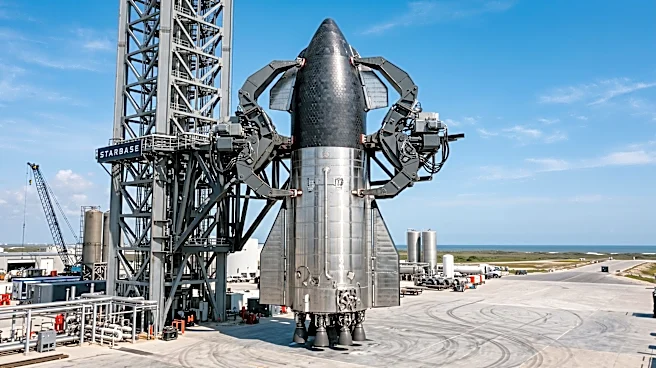
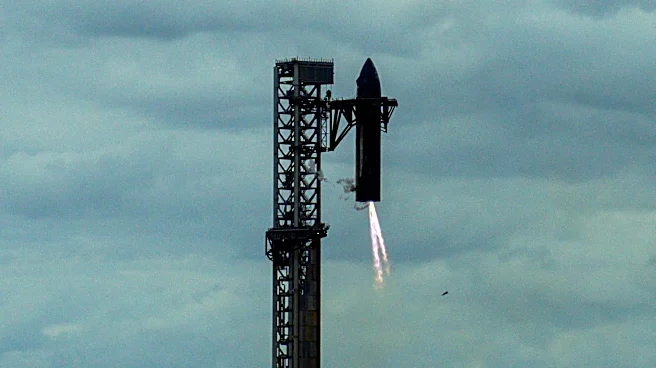
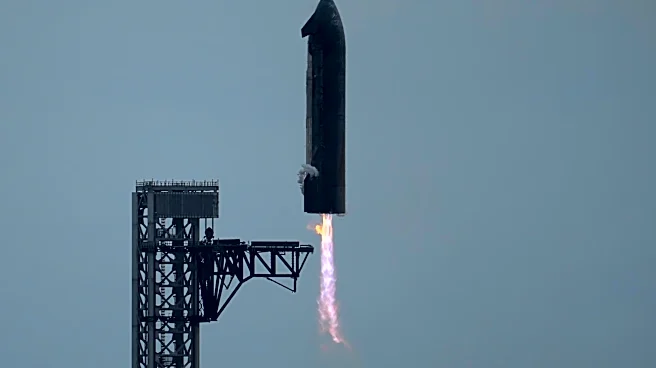
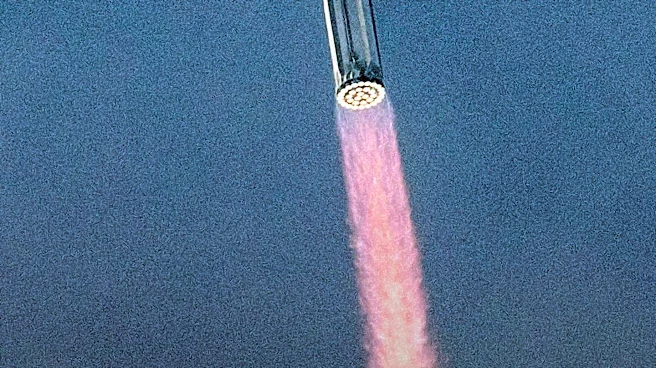
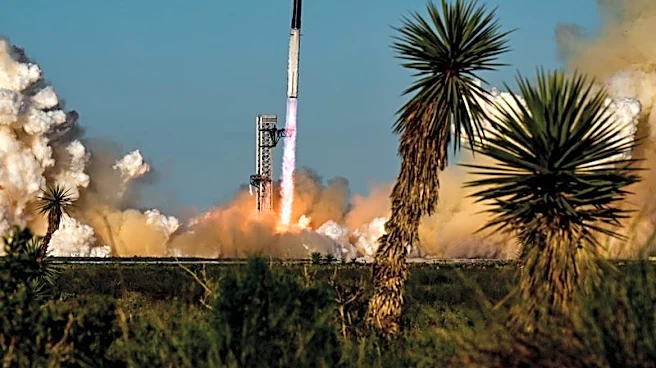
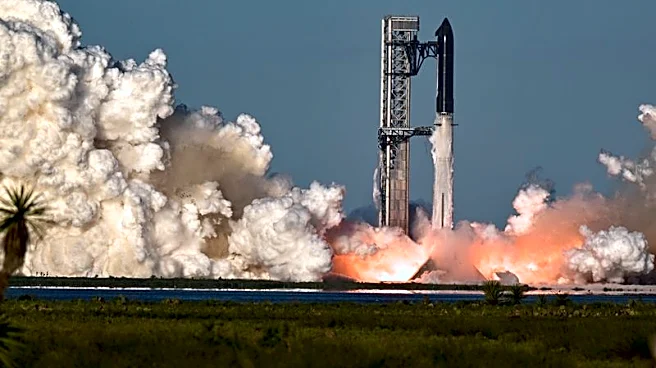
SpaceX successfully executed the first-ever mid-air capture of its Starship rocket's second stage, Ship 42, at its Starbase launch pad in Texas. The 171-foot-tall vehicle was caught by the mechanical arms of the launch tower, nicknamed 'Mechazilla,' after
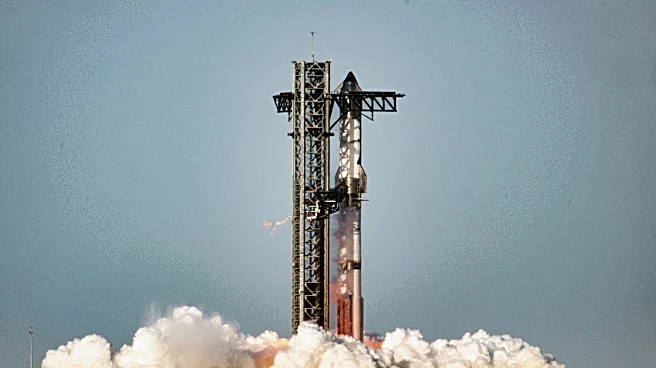
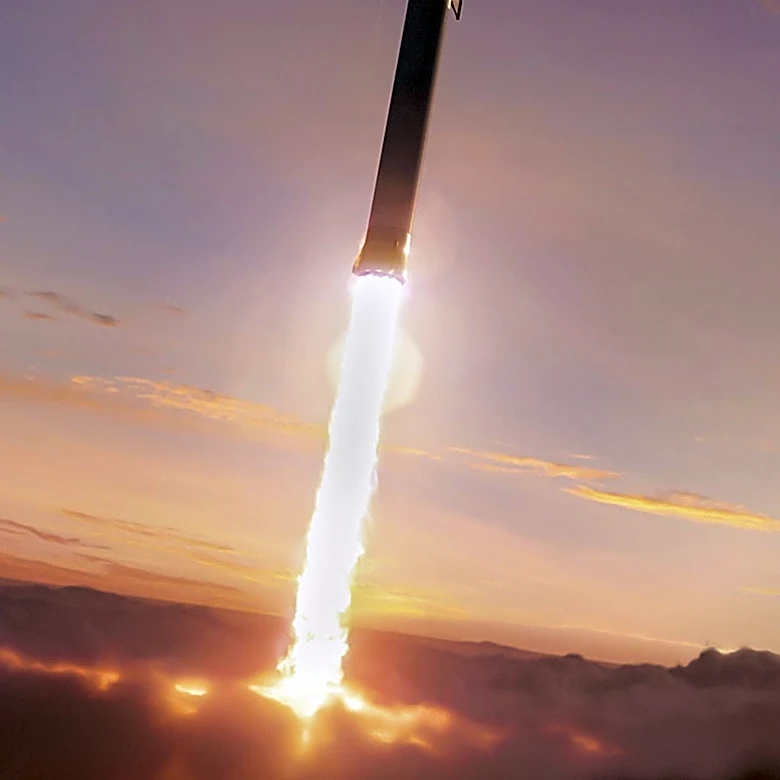
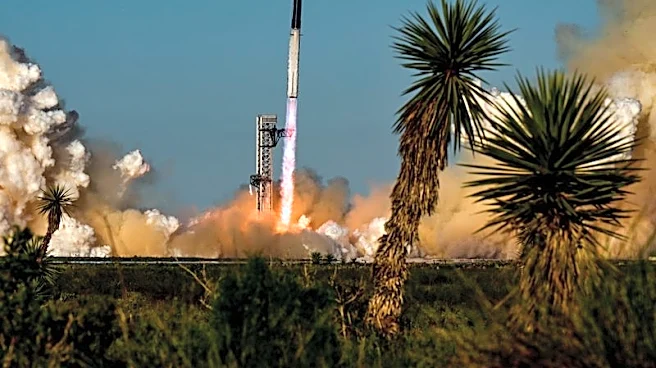
completing a record-setting 22.5-hour orbital flight that included 14 orbits of Earth. This achievement marks a significant milestone in SpaceX's pursuit of a fully reusable orbital-class launch system. During its flight, Starship also deployed 26 next-generation Starlink satellites, which are reportedly in good health and beginning to raise their orbits. However, the mission was not a complete success, as the Super Heavy booster, which was also intended to be caught, exploded shortly after liftoff due to a fuel-system alarm. The root cause of the booster's failure is currently under investigation by SpaceX.
Why It's Important?
The successful orbital catch of the Starship upper stage is a critical step towards achieving full reusability in spaceflight, a long-standing goal for SpaceX founder Elon Musk. This capability could drastically reduce the cost of space launches by eliminating the need to build new upper stages for each mission, which are often the more complex and expensive components. Such cost reductions would significantly benefit SpaceX's Starlink broadband internet network by enabling more frequent and cheaper satellite deployments. Furthermore, Starship is slated to play a crucial role in NASA's crewed moon missions, potentially starting as early as 2028, serving as a landing system. The ability to recover and reuse the upper stage demonstrates advanced guidance, engine control, and heat protection technologies, pushing the boundaries of current space engineering. The booster's failure, however, highlights that significant challenges remain in ensuring the reliability and full reusability of the entire Starship system.
What's Next?
SpaceX engineers will now analyze the extensive data gathered from Ship 42's performance, particularly focusing on the heat shield's integrity after atmospheric reentry. The company will also investigate the root cause of the Super Heavy booster's explosion to implement necessary design or operational changes for future flights. The next steps for the Starship program will likely involve further test flights aimed at repeating the successful upper stage catch and, crucially, achieving a successful recovery of the booster. SpaceX is also preparing to expand Starship operations to NASA's Kennedy Space Center in Florida, with another launch site planned for Louisiana. The ultimate goal is to establish a routine, rapid turnaround for both stages of the Starship system, which would then pave the way for more ambitious missions, including point-to-point travel on Earth and eventual mass transit to Mars.
Beyond the Headlines
The successful orbital catch of Starship's upper stage represents a paradigm shift in space transportation, moving closer to a future where space travel could become significantly more accessible and affordable. This development has profound implications for various sectors, including satellite deployment, space tourism, and deep-space exploration. The engineering feat of catching a 171-foot vehicle descending from orbit with precision mechanical arms underscores the innovative approaches SpaceX is taking to overcome traditional aerospace challenges. While the immediate focus is on technical validation and reliability, the long-term vision includes creating a fleet of Starships capable of supporting sustained human presence beyond Earth. This achievement also intensifies competition within the space industry, potentially pressuring other launch providers to accelerate their own reusability efforts to remain competitive in a rapidly evolving market.