
What's Happening?
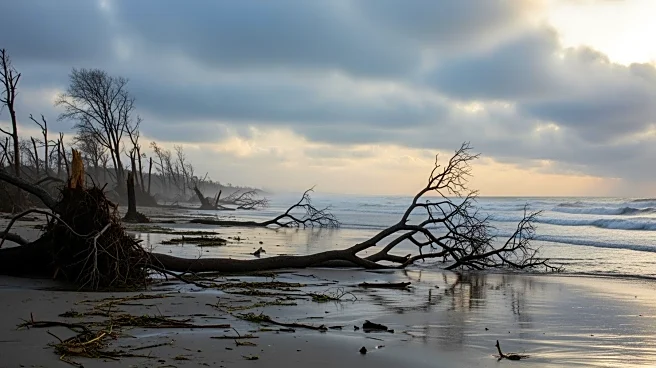
Hurricane Melissa has left a trail of destruction in Westmoreland, Jamaica, after making landfall with winds exceeding Category 5 strength. The storm has devastated infrastructure, leaving the parish without
electricity and severely impacting communication networks. Many homes, both wooden and concrete, have been destroyed, and essential services like food stores and medical facilities are inaccessible. The hurricane has also highlighted long-standing vulnerabilities in the region, such as irregular land tenure and inadequate infrastructure. The local community has been at the forefront of initial recovery efforts, clearing debris and assisting neighbors, but formal rescue operations have been slow to materialize.
Why It's Important?
The devastation in Westmoreland underscores the urgent need for coordinated recovery efforts that address both immediate needs and long-term vulnerabilities. The hurricane has exposed systemic issues such as fragile housing and limited economic opportunities, which require comprehensive solutions. The situation calls for significant government and international support to rebuild infrastructure and provide essential services. The response to this disaster could set a precedent for how similar crises are managed in the future, emphasizing the importance of community involvement and equitable recovery strategies.
What's Next?
Efforts are underway to conduct on-the-ground assessments to guide recovery plans and budget allocations. The Jamaican government, along with international partners, is expected to play a crucial role in providing the necessary resources and support. There is a pressing need for agricultural support to ensure food security and economic stability in the region. The recovery process will likely involve addressing long-standing issues such as land tenure and infrastructure improvements to build resilience against future disasters.