



What's Happening?
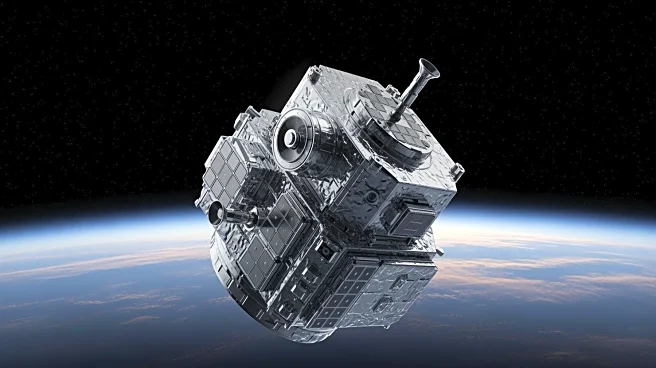
NASA's Libera instrument has successfully completed comprehensive environmental testing, marking a significant milestone in its development. The instrument is designed to maintain the global data record of Earth's radiation budget, a critical component
in understanding the planet's climate and energy systems. Developed by the University of Colorado Boulder's Laboratory for Atmospheric and Space Physics, Libera is part of NASA's Earth Venture Continuity mission, which aims to provide innovative, cost-effective solutions for continuing essential Earth science measurements. Libera will be launched on the Joint Polar Satellite System-4 (JPSS-4), a collaboration between NASA and the National Oceanic and Atmospheric Administration (NOAA), and is expected to be operational by 2027. The instrument will succeed the Clouds and the Earth's Radiant Energy System (CERES) instruments, continuing a legacy of monitoring that began in 1997.
Why It's Important?
The successful testing and eventual deployment of the Libera instrument are crucial for ongoing climate research and environmental monitoring. By continuing the data record of Earth's radiation budget, Libera will provide valuable insights into the planet's energy balance, which is essential for understanding climate change and its impacts. This data supports weather forecasting, agricultural planning, and strategic risk assessments, benefiting both governmental and commercial sectors. The collaboration between NASA and NOAA highlights the importance of inter-agency cooperation in addressing global challenges such as climate change. The continuation of this data record ensures that scientists and policymakers have the necessary information to make informed decisions regarding environmental policies and strategies.
What's Next?
Following its successful testing, the Libera instrument will be delivered to Northrop Grumman in Gilbert, Arizona, for integration onto the JPSS-4 satellite. The satellite, once launched, will be named NOAA-22 and will carry other critical instruments, including the Visible Infrared Imaging Radiometer Suite and the Ozone Mapping Profiler Suite. The launch is targeted for 2027, and once operational, Libera will begin its mission to monitor Earth's radiation budget. The data collected will be instrumental in enhancing the accuracy of climate models and forecasts, providing a foundation for future research and policy development.