



What's Happening?
Ukraine's innovative use of robotics in warfare is prompting NATO to reconsider traditional military doctrines. Ukrainian President Volodymyr Zelensky highlighted a historic event where Russian troops surrendered to Ukrainian robots. Ukraine has been
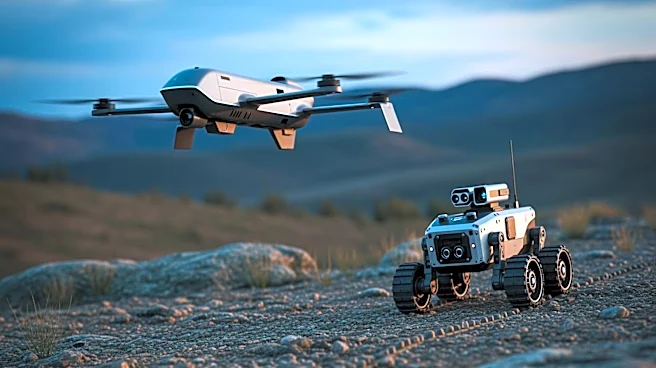
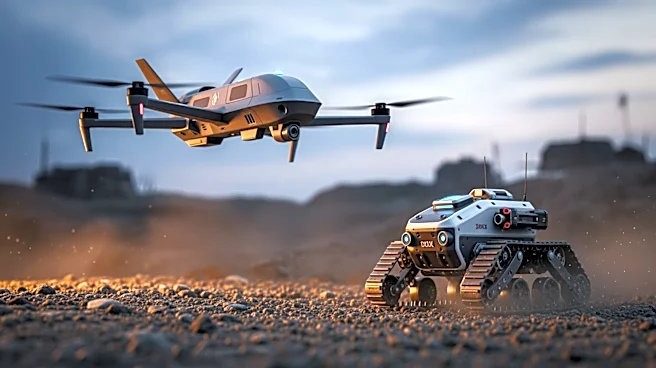
deploying ground and aerial robots in combat, conducting over 22,000 missions in three months. This approach is influencing NATO's studies on integrating robotics into military operations. The use of unmanned ground vehicles (UGVs) and drones is reshaping battlefield strategies, with NATO exploring practical force options and testing them in realistic scenarios.
Why It's Important?
The integration of robotics in warfare represents a significant shift in military strategy, offering potential advantages in terms of efficiency and reduced human casualties. Ukraine's success in deploying robotic systems highlights the potential for technological advancements to alter the dynamics of conflict. NATO's interest in these developments indicates a broader trend towards modernizing military capabilities and adapting to new forms of warfare. The use of robotics could lead to more precise and effective military operations, influencing global defense strategies and investments in military technology.
What's Next?
NATO is likely to continue its research and development efforts to integrate robotics into its military operations. This may involve collaborations with member states and private sector partners to enhance technological capabilities. The ongoing conflict in Ukraine serves as a testing ground for these innovations, with potential implications for future military engagements. As robotics technology advances, ethical and legal considerations will also need to be addressed, particularly regarding the use of autonomous systems in combat.