



What's Happening?
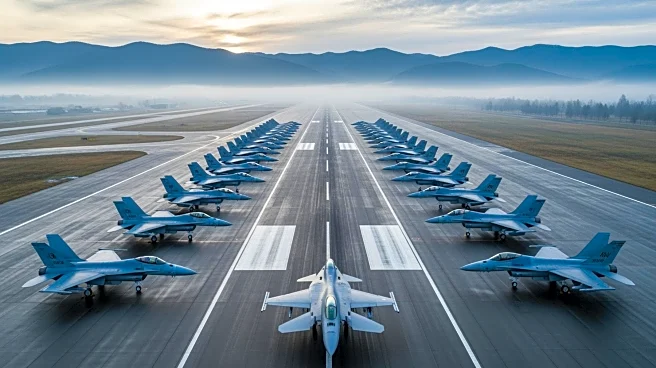
The United States has bolstered its military presence at Kadena Air Base in Japan, deploying advanced fighter jets as part of a strategic transition that began in fall 2022. This move aims to maintain a steady-state fighter capability and enhance readiness
to defend Japan amid rising tensions in the Western Pacific. The deployment includes F-22, F-15C, F-15E, F-16C, F-16CM, and F-35A aircraft from various U.S. bases. The transition involves phasing out older F-15C/D jets and replacing them with newer F-15EX jets. This reinforcement is part of a broader U.S. strategy to deter Chinese military activities near Taiwan and Japan, both of which are key U.S. allies in the region.
Why It's Important?
The reinforcement of U.S. air power at Kadena Air Base is significant due to the strategic location of the base, which is the closest U.S. air base to Taiwan. This move underscores the U.S. commitment to its defense obligations in the region, particularly in light of China's increasing military activities. The presence of advanced fighter jets enhances the U.S. military's ability to project power and respond to potential threats, thereby contributing to regional stability. The transition to more advanced aircraft also reflects the U.S. military's ongoing modernization efforts to maintain air superiority in the face of evolving threats.
What's Next?
The U.S. Air Force plans to continue its rotational deployment of fighter jets at Kadena until the permanent stationing of F-15EX jets is completed by spring 2026. This ongoing presence is expected to deter aggression and ensure readiness to respond to any escalation in the region. The U.S. will likely continue to monitor Chinese military activities closely and adjust its deployments as necessary to maintain a strategic advantage.