




What's Happening?
California's Board of Forestry and Fire Protection has unanimously adopted new landscaping requirements for properties within five feet of homes in designated fire-prone areas, an area referred to as 'Zone Zero.' These regulations, which apply to an estimated
2 million homes in State Responsibility Areas and Very High Fire Hazard Severity Zones, mandate the removal of all plants within one foot of a home and require the first five feet to be free of combustible materials like firewood, fallen leaves, and wood chips. Additionally, wooden sheds and wooden fences attached to houses are prohibited within this zone. Homeowners will have up to five years to comply after the formal rule-making process is completed, likely in September, while new constructions must adhere immediately. The decision follows nearly six years of debate and controversy, with the board emphasizing the necessity of these measures to address the state's wildfire crisis.
Why It's Important?
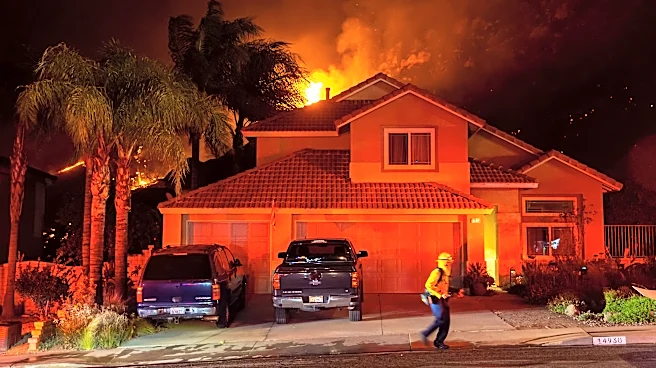
These new 'Zone Zero' regulations represent a significant shift in California's approach to wildfire prevention, directly impacting millions of homeowners and potentially reshaping residential landscapes across fire-prone regions. The rules aim to create a critical buffer zone around homes, drastically reducing the risk of structures igniting during wildfires. This is particularly important given that wildfires have burned approximately 14 million acres and destroyed over 60,000 homes and structures in California over the last decade. While controversial due to concerns about cost and aesthetic impact, the regulations are seen by fire officials and experts as essential for community safety and resilience against increasingly severe fire seasons. The long compliance period allows homeowners time to adapt, but the immediate application to new constructions signals a proactive stance on future development in high-risk areas.
What's Next?
Following the formal completion of the rule-making process, likely in September, Californians in affected areas will have up to five years to comply with the new 'Zone Zero' landscaping requirements. New constructions, however, must adhere immediately. The regulations will be rolled out in two phases: phase one, within three years, focuses on removing combustible materials within five feet of the house, and phase two, within five years, addresses more extensive changes, including the one-foot vegetation-free safety zone and replacement of combustible gates. Enforcement will be handled by Cal Fire in State Responsibility Areas and by local fire authorities in local responsibility areas, potentially involving property inspections and penalties. Discussions are ongoing regarding programs to help middle- and lower-income homeowners, as well as older and disabled residents, finance and implement these changes. Local governments also retain the flexibility to adopt alternative versions of Zone Zero, as seen in San Diego and Berkeley.
Beyond the Headlines
The implementation of 'Zone Zero' rules extends beyond immediate fire safety, touching upon broader themes of environmental adaptation, property rights, and community resilience in the face of climate change. The controversy surrounding these regulations highlights the tension between individual homeowner autonomy and collective public safety, as well as the financial burdens placed on residents to adapt to new environmental realities. The push for financial assistance programs for homeowners underscores the socio-economic equity considerations inherent in climate adaptation policies. Furthermore, the flexibility for local governments to tailor regulations suggests an evolving model of governance where state mandates are balanced with local needs and conditions. This development could set a precedent for other regions grappling with similar environmental threats, emphasizing a proactive, albeit sometimes contentious, approach to living with natural hazards.