




What's Happening?
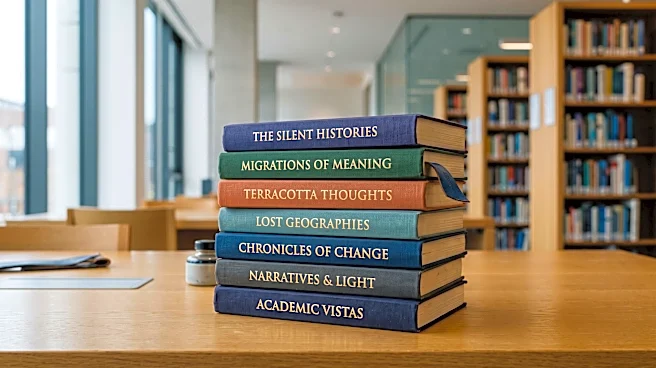
PEN America, a nonprofit organization dedicated to free expression and literature, has documented a record 11,982 school book bans during the 2025-26 school year. This figure includes instances where books were removed from classrooms, school libraries,
or curricula, or had student access restricted. A notable example cited is the removal of Toni Morrison’s 1970 novel, 'The Bluest Eye,' from library shelves in Georgia’s Cobb County School District. According to Dr. Shauna D.A. Knox, a contributing writer for The Root, these bans disproportionately affect Black authors, who are already underrepresented in educational materials. The Education Trust found that white writers and illustrators create nearly seven times as many English language arts books as their Black counterparts. The removal of books by Black authors further diminishes students' exposure to diverse voices and perspectives, impacting learning outcomes, as evidenced by Stanford research showing improved attendance and GPAs for students taking ethnic studies courses.
Why It's Important?
The surge in school book bans carries significant implications for education, intellectual freedom, and cultural representation in the U.S. The removal of books, particularly those by Black authors, exacerbates an existing disparity in educational content, limiting students' access to diverse narratives and historical perspectives. This trend can hinder the development of critical thinking and empathy among students by narrowing their understanding of the world. Furthermore, the 'bookshelf default' phenomenon, where banned books tend to remain out of circulation unless actively challenged, creates a systemic barrier to their return. This situation impacts not only students but also authors, publishers, and the broader literary community, potentially stifling creative expression and the exploration of complex societal issues within educational settings. The actions of school districts in banning books also raise questions about local control versus broader educational standards and the role of parents and community members in shaping curriculum.
What's Next?
With new legislative sessions commencing in January, parents and advocates are urged to engage with lawmakers to address the issue of book bans. Dr. Shauna D.A. Knox suggests that parents contact their state senators and representatives to advocate for legislation that prohibits book removals based on an author's race, origin, or background. Such legislation would also require challenged books to remain in schools during review and establish a state office to investigate complaints and withhold education funding from non-compliant districts. Additionally, parents are encouraged to file public records requests for lists of banned books in their school districts and demand public votes from school boards to restore these titles. These actions aim to empower communities to challenge the 'bookshelf default' and ensure that diverse voices, particularly those of Black authors, are represented in American education.
Beyond the Headlines
The increasing number of book bans reflects a deeper societal debate over cultural values, historical narratives, and the control of information in public education. Beyond the immediate impact on students and authors, these bans can foster an environment of self-censorship within schools and libraries, as educators may become hesitant to introduce potentially controversial materials. This trend also highlights the tension between parental rights and academic freedom, raising legal and ethical questions about who determines appropriate educational content. The long-term implications could include a less inclusive and less intellectually robust educational system, potentially leading to a generation of students with a narrower understanding of diverse experiences and perspectives. The focus on Black authors in these bans also underscores ongoing challenges related to racial equity and representation within American institutions.