






What's Happening?
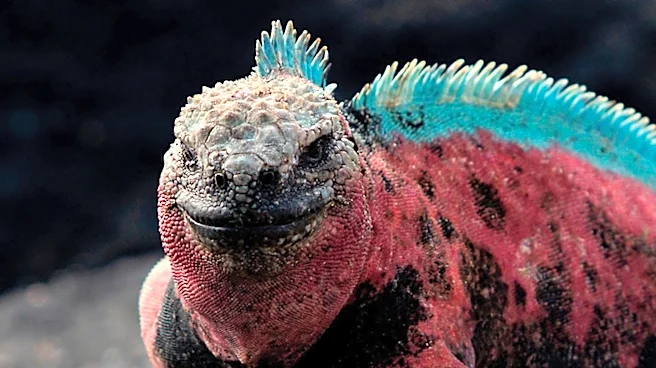
Scientists are calling on Ecuador to intensify efforts against the trafficking of Galápagos marine iguanas, a species endemic to the islands, following a surge in seizures. These iguanas are highly sought after as exotic pets, despite being protected
under Ecuadorian law and Appendix I of the CITES global wildlife trade treaty, which prohibits their international commercial trade. Recent incidents include the apprehension of a Russian woman attempting to smuggle 32 marine iguanas to Iceland and the arrest of three Thai nationals with 12 young iguanas bound for Asian markets. Experts, including marine conservationist Juan José Alava, highlight that this trafficking is often orchestrated by organized crime networks. The scientists advocate for auditing airport detection systems, dismantling smuggling networks, and closing CITES loopholes that allow the legal trade of offspring from illegally sourced wildlife. They also suggest providing alternative livelihoods for artisanal fishers in the Galápagos and coastal Ecuador, who may be recruited by traffickers due to economic hardship.
Why It's Important?
The illegal trade of Galápagos marine iguanas poses a significant threat to the biodiversity of the Galápagos Islands, a region renowned for its unique ecosystems and its role in evolutionary science. The marine iguana, a threatened species and the only lizard globally that swims in the ocean and consumes sea algae, faces additional pressures from climate change, habitat degradation, and pollution. The involvement of organized crime in wildlife trafficking exacerbates these threats, undermining conservation efforts and the rule of law. The call to close CITES loopholes is crucial because current regulations can inadvertently facilitate the trade of 'captive-bred' iguanas without verifying the legality of their parent stock, effectively legitimizing the illicit trade. If these loopholes are not addressed, the long-term survival of these unique species could be jeopardized, impacting the ecological balance of the Galápagos and diminishing a global natural heritage.
What's Next?
Ecuador is urged to implement stricter oversight at airports and conduct thorough audits of its wildlife smuggling detection methods, including scrutinizing personnel involved in airport operations and Galápagos National Park. The government is also pressed to investigate why trafficking persists despite stringent laws and to provide economic alternatives for artisanal fishers to reduce their vulnerability to recruitment by traffickers. Internationally, an upcoming CITES meeting in November will discuss new guidelines to determine the legality of trading individuals from illegally taken parent or founder stock. If CITES parties agree to these new guidelines, it could lead to the confiscation and repatriation of all Galápagos iguanas currently held in terrariums worldwide that originated from illegally sourced stock. This would represent a significant step towards strengthening global wildlife protection and ensuring the preservation of the Galápagos' unique biodiversity for future generations.
Beyond the Headlines
The trafficking of Galápagos marine iguanas highlights a complex interplay of environmental, economic, and ethical challenges. The demand for exotic pets in Europe and Asia fuels a lucrative black market, often exploiting vulnerable local communities. The issue of corruption, particularly at airports, is a critical underlying factor enabling these illicit operations. Furthermore, the debate around CITES loopholes brings to light the ethical dilemma of 'captive-bred' animals whose origins may be tainted by illegal trade. The potential for global confiscation and repatriation of iguanas could set a precedent for how international treaties address the offspring of illegally acquired wildlife, potentially reshaping the legal and ethical landscape of exotic pet ownership. This situation underscores the broader challenge of protecting biodiversity in an interconnected world where economic disparities and criminal networks can undermine even the most stringent conservation laws.