
What's Happening?
A severe winter storm, named Fern, has led to significant disruptions in air travel across the United States, with over 9,000 flights canceled over the weekend. According to FlightAware, 3,571 flights were
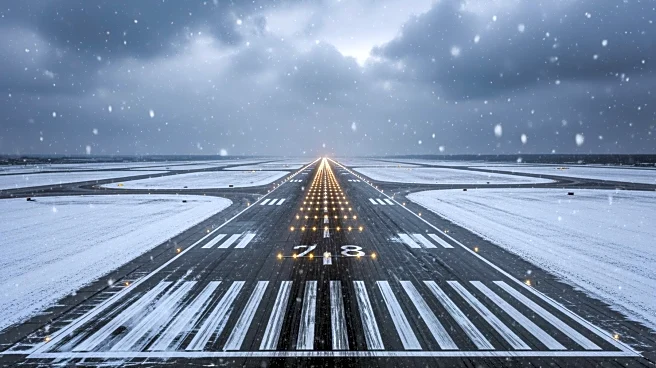
canceled on Saturday, with an additional 6,155 cancellations already planned for Sunday. Major airports in the New York and Philadelphia areas are heavily affected, with Newark Liberty International Airport seeing 64 cancellations on Saturday and 440 on Sunday. John F. Kennedy International Airport and LaGuardia Airport are also experiencing significant disruptions. The storm is bringing a mix of ice, sleet, and potentially more than a foot of snow to New Jersey and surrounding states. In response, Governor Mikie Sherrill has declared a state of emergency starting at 5 p.m. Saturday. American Airlines and Southwest Airlines are among the most affected carriers, with 822 and 571 flights canceled, respectively.
Why It's Important?
The widespread flight cancellations due to Winter Storm Fern highlight the vulnerability of air travel to severe weather conditions. The storm's impact on major airport hubs can lead to cascading delays and disruptions across the national and international flight network. This situation underscores the importance of robust contingency planning by airlines and airports to manage such disruptions. The economic implications are significant, affecting not only airlines but also passengers, who may face additional costs and inconvenience. The declaration of a state of emergency by Governor Sherrill indicates the severity of the storm and the potential for further disruptions in transportation and public safety. The storm's duration and intensity could also strain local resources and emergency services.
What's Next?
As the storm continues, travelers are advised to stay updated with their airlines for the latest information on flight statuses. Airlines are likely to issue travel waivers, allowing passengers to rebook flights without penalties. The state of emergency declared in New Jersey may lead to further measures to ensure public safety, such as road closures or restrictions. Emergency services and local governments will need to coordinate responses to manage the storm's impact effectively. The situation may prompt discussions on improving infrastructure resilience to extreme weather events, particularly in regions frequently affected by winter storms.