


What's Happening?
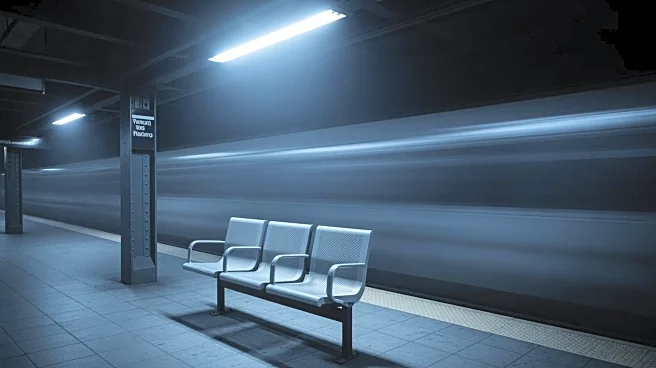
The New York Police Department (NYPD) has reported a significant increase in transit crime, with offenses rising nearly 20% in February compared to the same month last year. This spike is attributed to the department's decision to pause ejections of rule-breaking
passengers from the subway system due to extreme cold weather conditions. The NYPD data indicates that over 190 offenses were reported underground last month, marking an 18.5% increase from February 2025. The decision to halt ejections was made as New York City experienced below-freezing temperatures for 19 days in February, culminating in a major blizzard that left much of the city under nearly two feet of snow. The report highlights that felony assaults against NYPD officers in transit also rose by 42%, with 17 attacks recorded last month. Additionally, the data shows that 27% of the reported crimes were felony assaults, while 52% were non-violent grand larcenies.
Why It's Important?
The increase in transit crime during February underscores the challenges faced by urban centers in balancing public safety with humanitarian considerations during extreme weather conditions. The NYPD's decision to pause ejections reflects a response to the harsh winter conditions, prioritizing the safety and well-being of individuals who might otherwise be left vulnerable to the elements. However, this policy shift has also led to a rise in criminal activity, highlighting the complex dynamics between law enforcement practices and public safety. The spike in crime could impact public perception of safety in the subway system, potentially affecting ridership and the city's broader efforts to maintain a secure and efficient public transit network. The situation also places pressure on city officials and law enforcement to develop strategies that effectively address crime while considering the welfare of all city residents during extreme weather events.
What's Next?
In response to the increase in transit crime, the NYPD and city officials may need to reassess their policies regarding ejections and enforcement during extreme weather conditions. This could involve exploring alternative measures to ensure safety without compromising the well-being of individuals during harsh weather. Additionally, the city might consider enhancing support services for vulnerable populations who rely on the subway system for shelter during cold spells. As the city moves forward, there may be increased scrutiny on how law enforcement balances crime prevention with humanitarian considerations, potentially leading to policy adjustments or new initiatives aimed at improving safety and security in the transit system.