






What's Happening?
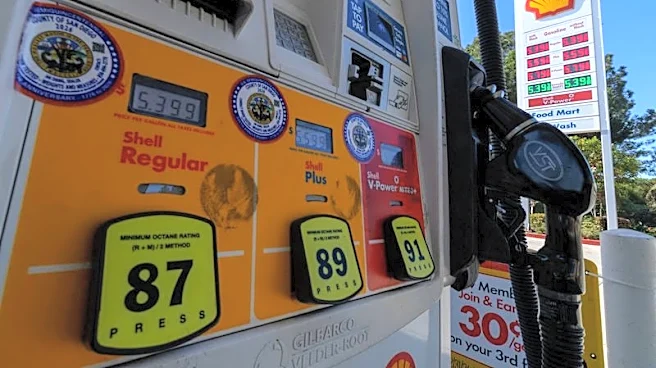
Fuel prices in the United States have been on a downward trend for the sixth consecutive week, despite ongoing geopolitical tensions in the Middle East. According to the U.S. Energy Information Administration (EIA), the national average on-highway gasoline
price has decreased by 8 cents to $3.831, while diesel prices have dropped by 16 cents to $4.668. The West Coast saw the most significant decrease in gasoline prices, with a 14-cent drop. President Trump has publicly criticized major oil companies for not reducing pump prices in line with the lower oil prices they are paying. He expressed his concerns on Truth Social, urging for faster reductions in gasoline prices.
Why It's Important?
The decline in fuel prices is significant for U.S. consumers, who have been vocal about the financial strain caused by high fuel costs. Lower prices at the pump can lead to increased disposable income for consumers, potentially boosting spending in other areas of the economy. However, the ongoing geopolitical instability, particularly in the Middle East, poses a risk to the stability of these price reductions. The situation highlights the complex interplay between global events and domestic economic conditions, with potential implications for U.S. energy policy and international relations.
What's Next?
The future of fuel prices in the U.S. will likely depend on the resolution of geopolitical tensions, particularly in the Middle East. Any developments in the peace negotiations between the U.S. and Iran could impact oil supply routes and, consequently, fuel prices. Additionally, the response from major oil companies to President Trump's criticism may influence how quickly consumers see further price reductions at the pump. Stakeholders, including policymakers and industry leaders, will need to monitor these developments closely to anticipate and mitigate potential economic impacts.