







What's Happening?
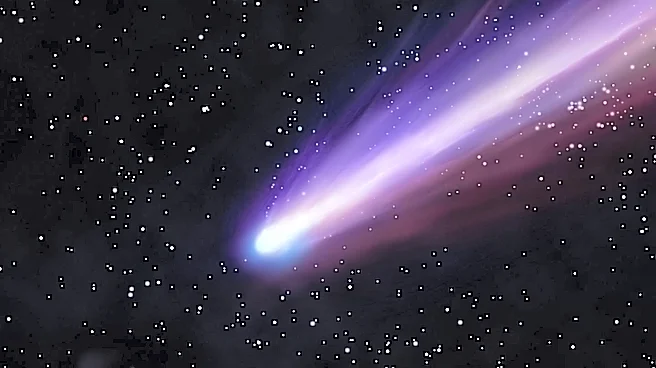
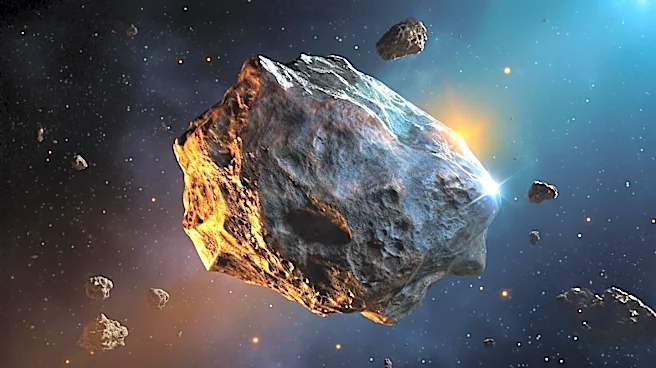
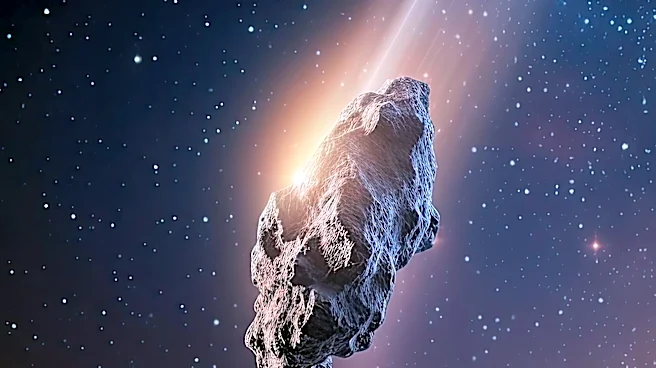
A study led by NASA's Center for Near-Earth Object Studies has reclassified a near-Earth object, 1998 SH2, from an asteroid to a 'dark comet.' This object, which had been cataloged as an asteroid for 27 years, was found to exhibit comet-like behavior
due to outgassing, which caused it to deviate from its predicted path. The discovery was made after the object was not found at its expected location during a close approach to Earth in 2025. The study highlights the potential for errors in current gravity-only impact risk models used for planetary defense.
Why It's Important?
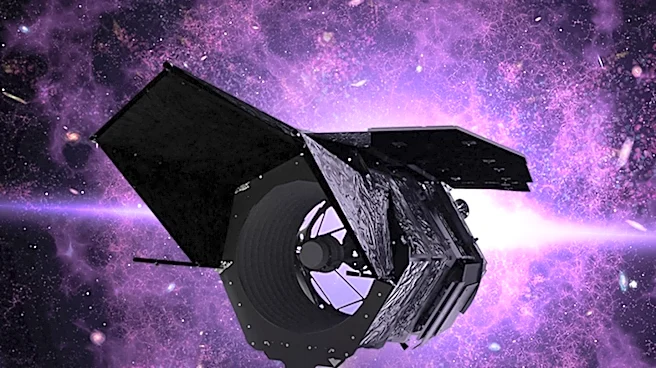
The reclassification of 1998 SH2 as a dark comet has significant implications for planetary defense strategies. It suggests that other near-Earth objects currently classified as asteroids may also be dark comets, introducing errors in impact probability calculations. This discovery underscores the need for improved detection and tracking methods, such as the upcoming NEO Surveyor mission, which will use infrared technology to identify objects that are invisible to optical surveys. Understanding the true nature of these objects is crucial for accurately assessing their potential threat to Earth.
What's Next?
The study calls for a systematic review of the near-Earth object catalog to identify other potential dark comets. This involves applying non-gravitational perturbation analysis to existing astrometric data. The NEO Surveyor mission, set to launch in 2027, will play a key role in detecting these objects by using infrared wavelengths to sense their thermal emissions. This approach will help refine impact risk assessments and improve planetary defense measures.