







What's Happening?
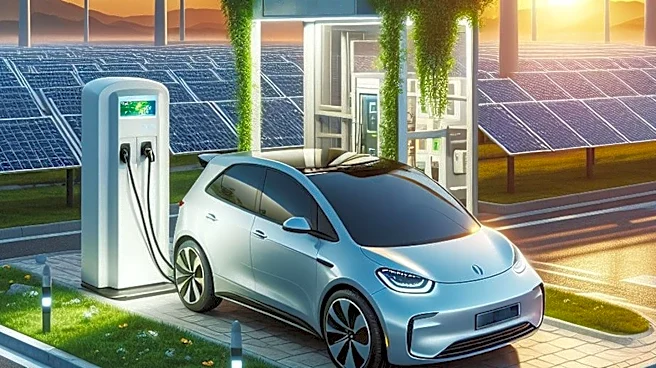
European countries are exploring the potential of transforming car parks into solar farms to reduce electricity bills and support decarbonization efforts. Solar power, recognized as a key component of Europe's clean energy transition, is becoming increasingly
cost-effective. The International Renewable Energy Agency (IRENA) reported that by 2024, solar panels were 41% cheaper than the lowest-cost fossil fuel alternatives. France has mandated that car parks with at least 80 spaces must be covered with solar panels, potentially adding 11 gigawatts of power to the grid. Similar mandates exist in Slovenia and several German regions. However, the UK has recently decided against mandating solar panels on new car parks, despite initial estimates suggesting significant savings.
Why It's Important?
The initiative to convert car parks into solar farms is crucial for Europe's energy strategy, as it offers a sustainable solution to rising electricity costs and supports broader decarbonization goals. By utilizing existing infrastructure, these solar car parks can generate electricity without additional land use, integrating with electric vehicle charging to further benefit the public. The decision by the UK to halt its solar car park plans is seen as a missed opportunity, as it could have provided substantial economic and environmental benefits. The resistance from some countries highlights the challenges in achieving a unified approach to renewable energy adoption across Europe.
What's Next?
Countries that have implemented solar mandates for car parks are expected to continue their efforts to meet decarbonization targets. The success of these initiatives in France and other regions may encourage further adoption across Europe. Meanwhile, the UK may revisit its decision in the future, especially if market conditions or policy incentives change. The ongoing development of solar technology and its integration with electric vehicle infrastructure will likely play a significant role in shaping future energy policies.
Beyond the Headlines
The broader implications of solar car parks extend beyond immediate economic benefits. They represent a shift towards more sustainable urban planning and infrastructure development. By reducing reliance on fossil fuels, these projects contribute to global efforts to combat climate change. Additionally, they offer a model for other regions worldwide to follow, potentially influencing international energy policies and encouraging investment in renewable technologies.