


What's Happening?
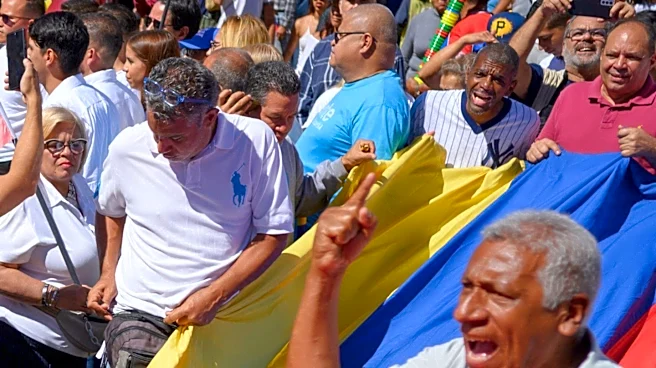
Hundreds of residents across Haiti, including in Port-au-Prince, Belladère, and Jérémie, are publicly appealing to El Salvador's President Nayib Bukele for assistance in combating armed gangs. Demonstrators have taken to the streets, chanting slogans
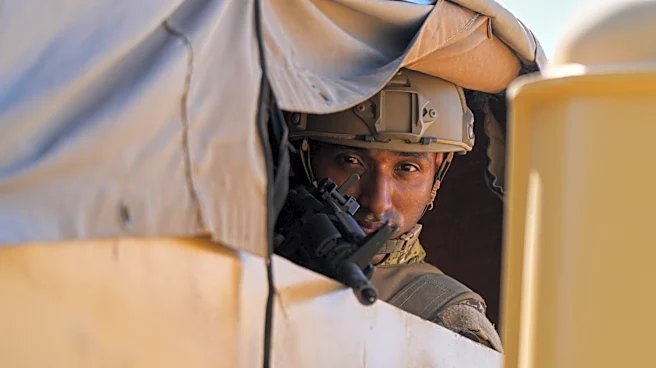
like 'Debloke peyi a' ('Unlock the country') and expressing praise for President Bukele. This public outcry follows the recent deployment of over 2,000 Salvadoran soldiers to Haiti after four Salvadoran aviation technicians, members of the UN-backed Gang Suppression Force (GSF), were ambushed. President Bukele has issued threats of major operations against gangs if the technicians are not released alive. The protests highlight a deep-seated frustration with the Haitian government's perceived inability to adequately equip and support its own National Police (PNH) and Armed Forces of Haiti (FAd’H), leading many to place their hopes in foreign intervention to restore security and allow displaced families to return home.
Why It's Important?
The widespread demonstrations in Haiti, calling for Salvadoran intervention, underscore a critical humanitarian and security crisis in the Caribbean nation. The public's appeal to a foreign leader like President Bukele, known for his stringent anti-gang policies in El Salvador, reflects a profound loss of confidence in Haiti's domestic institutions. This situation could set a precedent for regional security dynamics, potentially influencing how other nations respond to internal conflicts and gang violence. For the U.S., a destabilized Haiti poses significant concerns regarding migration, regional security, and humanitarian aid. The potential for increased foreign involvement, particularly from a non-traditional partner like El Salvador, could reshape diplomatic efforts and international cooperation in addressing Haiti's complex challenges. The outcome of this situation will impact the lives of countless Haitians, determining their ability to return to their homes and rebuild their livelihoods.
What's Next?
The immediate focus remains on the fate of the four Salvadoran aviation technicians and the potential for increased Salvadoran military operations in Haiti. The ongoing public demonstrations are likely to exert further pressure on both the Haitian government and international bodies to address the escalating gang violence. It remains to be seen whether President Bukele will expand El Salvador's military presence or operations beyond the current deployment, and what form such an intervention might take. The international community, including the United States, will be closely monitoring these developments, as any significant foreign military action in Haiti could have broader geopolitical implications. The Haitian government faces the challenge of either reasserting its authority or formally requesting further international assistance to quell the unrest and restore order.
Beyond the Headlines
The calls for President Bukele's intervention in Haiti highlight a growing trend where leaders perceived as strong on security, even if controversial, gain popular support in regions plagued by violence. This phenomenon raises complex questions about national sovereignty, the effectiveness of traditional peacekeeping missions, and the public's willingness to embrace unconventional solutions in times of crisis. The situation in Haiti could also spark debates about the long-term implications of foreign military involvement in domestic security issues, particularly concerning human rights and the rule of law. Furthermore, the amplification of President Bukele's profile through social media in Haiti suggests a shift in how public opinion is shaped and how international appeals for assistance are mobilized, bypassing traditional diplomatic channels. This development could influence future responses to similar crises in other vulnerable nations.