






What's Happening?
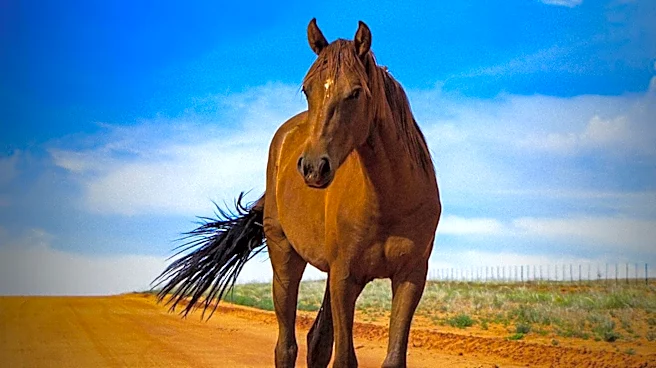
The New World screwworm (Cochliomyia hominivorax), a flesh-eating parasite, has been detected in a working ranch horse in Presidio County, Texas. This marks the first equine infection in the current U.S. outbreak, according to the U.S. Department of Agriculture
and the U.S. Equestrian Federation. The larvae were found in a wound on the horse's hind leg. The New World screwworm was eradicated from the U.S. in the 1960s but reappeared earlier this year. Since June, there have been 49 screwworm cases in the U.S., primarily affecting cattle, goats, sheep, and dogs in South and West Texas. As of Monday, only two active cases remain: the infected horse and a dog in Crockett County. The female screwworm fly lays eggs in warm, wet orifices or open wounds, and the hatched larvae burrow into the animal to feed on living tissue. Early detection and reporting are crucial for eradication efforts, which include treating infected animals and releasing sterile flies to prevent self-sustaining populations.
Why It's Important?
The detection of the New World screwworm in a horse elevates the concern from primarily a livestock issue to a direct equine-management challenge for horse owners across the U.S., particularly in Texas. The U.S. Equestrian Federation is advising horse owners to conduct daily inspections for wounds, swelling, drainage, foul odor, or maggots, and to practice good wound care, fly control, and biosecurity. The economic impact of the screwworm is significant; the USDA estimates it could cost Texas producers $732 million per year and result in a $1.8 billion loss to the Texas economy. The current outbreak highlights vulnerabilities in biosecurity protocols and the need for robust systems to prevent the spread of such parasites, affecting not only individual animal health but also broader agricultural and equestrian industries.
What's Next?
Texas officials have implemented movement restrictions for susceptible animals in the infested zone to contain the spread. The USDA continues its surveillance, trapping, and sterile-fly release programs as part of its eradication efforts. However, the U.S. is facing a shortage of sterile flies and production capacity, with only 800 million sterile flies released since June, compared to the 500 million per week used during the 1960s eradication. To address this, a biosecurity facility is being built in San Antonio by Flyttr, a Virginia-based company, which is expected to begin producing sterile flies within six months. The U.S. Equestrian Federation is also implementing additional protocols for its events, including checking horses for wounds upon arrival and continuous monitoring during competitions, to mitigate the risk of further spread.
Beyond the Headlines
The re-emergence of the New World screwworm underscores the persistent threat of eradicated diseases and the complexities of maintaining biosecurity in a globalized world. The shortage of sterile flies points to potential underinvestment in critical infrastructure for animal health and disease prevention. This situation highlights the need for continuous vigilance and robust funding for agricultural research and biosecurity measures. Beyond the immediate economic and animal health concerns, the outbreak could lead to stricter regulations on animal movement and increased biosecurity demands on farms and equestrian facilities, potentially impacting operational costs and practices across the livestock and equine industries. The incident also serves as a reminder of the interconnectedness of animal health, public health, and economic stability.