







What's Happening?
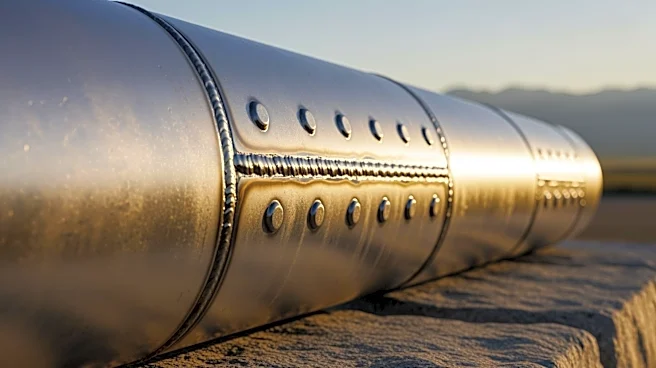
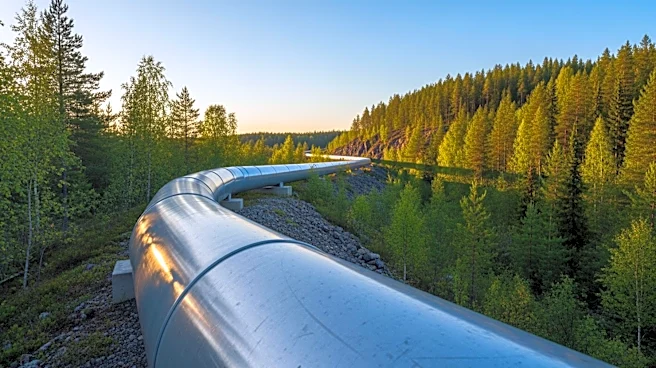
President Trump has granted approval for the Bridger Pipeline Expansion, a significant oil pipeline project connecting Canada to the U.S. The pipeline, dubbed 'Keystone Light,' is set to transport up to 550,000 barrels of oil daily through Montana and
Wyoming. The project aims to avoid Native American reservations and will be constructed primarily within existing pipeline corridors and on private land. Despite the approval, the pipeline still requires additional state and federal environmental clearances before construction can commence, which is anticipated to start in 2027 and conclude by early 2029. Environmental groups have expressed concerns over potential spills, citing past incidents involving Bridger Pipeline and its subsidiaries.
Why It's Important?
The approval of the Bridger Pipeline Expansion represents a significant shift in U.S. energy policy under President Trump, emphasizing fossil fuel infrastructure development. This move could bolster the oil industry by increasing crude oil transportation capacity, potentially enhancing U.S. energy independence and economic growth. However, it also raises environmental concerns, as past pipeline accidents have resulted in substantial ecological damage. The project could face opposition from environmentalists and legal challenges, impacting its progress and the broader debate on energy policy and climate change.
What's Next?
The Bridger Pipeline Expansion must secure further environmental approvals before construction can begin. Environmental groups are likely to challenge the project, aiming to halt its progress due to spill risks and climate change implications. The timeline for construction is set to align with the end of President Trump's term, potentially safeguarding the project from policy reversals by future administrations. Stakeholders, including state governments and environmental organizations, will play crucial roles in the project's advancement or obstruction.
Beyond the Headlines
The Bridger Pipeline Expansion highlights the ongoing tension between economic development and environmental protection. The project's approval could set a precedent for future infrastructure projects, influencing regulatory standards and environmental policies. The pipeline's construction and operation will require robust safety measures to prevent spills, which have historically caused significant harm to ecosystems and communities. The development also underscores the geopolitical dynamics of energy trade between Canada and the U.S., with potential implications for international relations and trade agreements.