



What's Happening?
Researchers at The Ohio State University have developed an artificial intelligence framework named LUMINA, designed to significantly improve the efficiency of space mission planning, particularly for lunar explorations. This system, created by PhD candidate
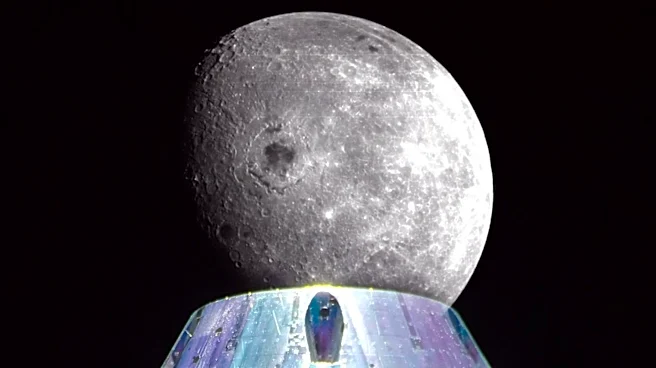
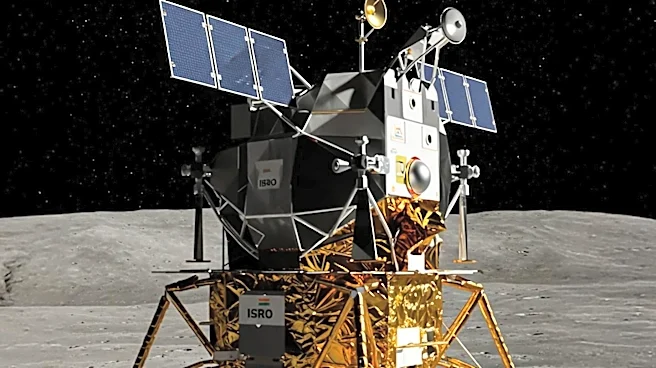
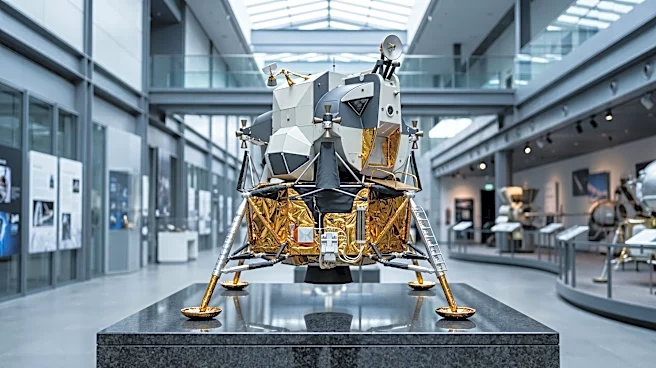
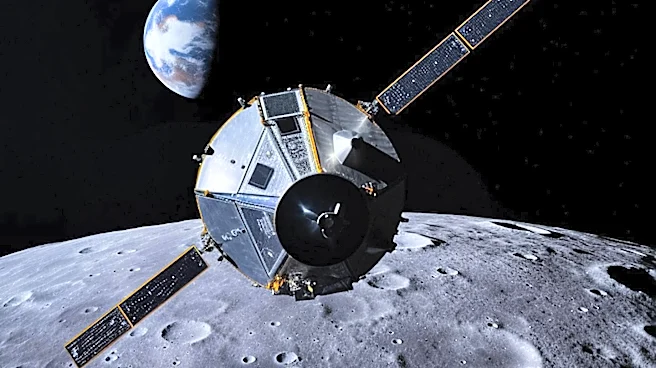
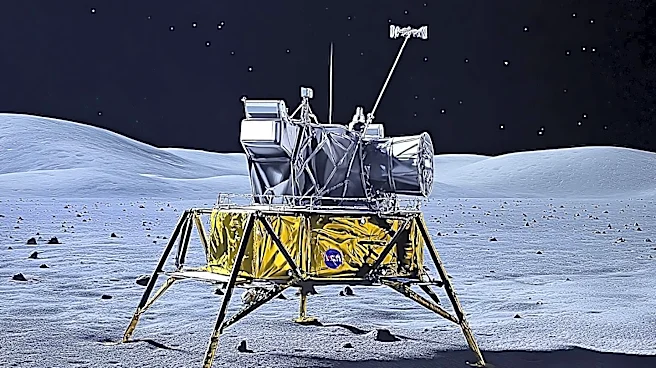
Gokce Inal and co-authored by Professor Alper Yilmaz, aims to help scientists evaluate potential lunar landing sites, identify hazards, and locate scientifically valuable geological features. LUMINA builds upon a previous model, LLaVA-LE, which could describe lunar terrain and answer scientific questions. The new framework extends these capabilities by planning and executing multi-step analyses, evaluating landing sites, and explaining its recommendations. The goal is to create an active scientific assistant that works alongside human mission planners, rather than a fully autonomous system. This development is crucial as space agencies, including NASA with its Artemis program, aim to establish a permanent presence on the moon, requiring extensive data analysis and preparation.
Why It's Important?
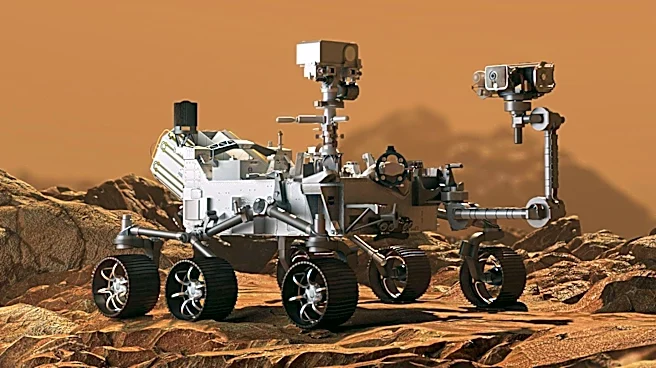
The development of LUMINA is important because it addresses the growing complexity and data volume associated with modern space exploration. Traditional mission planning can take years, but with AI, this process can become significantly more efficient and accurate. By providing a tool that can analyze millions of images and datasets, LUMINA can help identify optimal landing sites, locate critical resources like water ice, and mitigate risks for future crews. This technology could reduce the time and resources needed for mission preparation, making ambitious goals like lunar colonization more feasible. Furthermore, the framework is designed to be generalizable, meaning it could be applied to mapping other planetary bodies like Mars or asteroids, extending its impact beyond lunar missions and potentially accelerating the pace of deep-space exploration.
What's Next?
The research team plans to continue developing LUMINA by testing it with new, high-quality lunar data to further evaluate its effectiveness in supporting mission planning. As NASA's Artemis program progresses and more lunar data becomes available, these results will be integrated to improve the system's capabilities. The ultimate vision is for LUMINA to evolve into an active scientific assistant that collaborates with human experts, providing critical insights and verifying decisions in real-time. This ongoing development aims to refine the AI's ability to make complex lunar observations and generate scientifically meaningful commentary for candidate landing sites, ensuring that future space missions are safer and more successful. The broader goal is to establish a pathway for agentic systems to become integral tools in future space exploration efforts.
Beyond the Headlines
Beyond its immediate utility in mission planning, LUMINA represents a significant step towards integrating advanced AI into critical scientific endeavors. This development highlights a shift from AI as a passive tool to an active, collaborative assistant, raising questions about the evolving roles of humans and AI in complex decision-making processes. Ethically, the system is designed to support human judgment rather than replace it, emphasizing a human-in-the-loop approach for high-stakes missions. Legally, the use of AI in identifying resources and hazards on celestial bodies could influence future international agreements on space resource utilization and safety protocols. Culturally, the success of such AI systems could further inspire public interest in space exploration and demonstrate the practical applications of advanced computing, potentially fostering a new era of scientific discovery driven by human-AI collaboration.