


What's Happening?
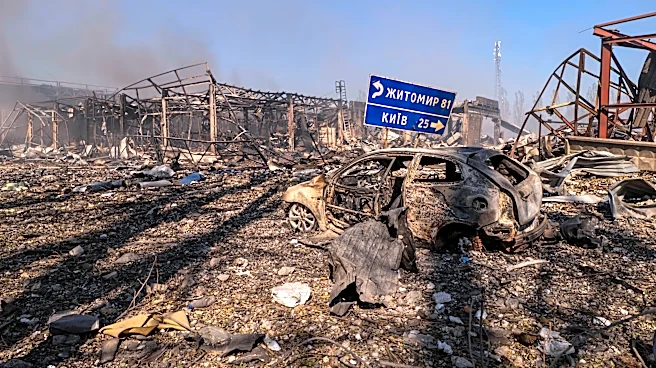
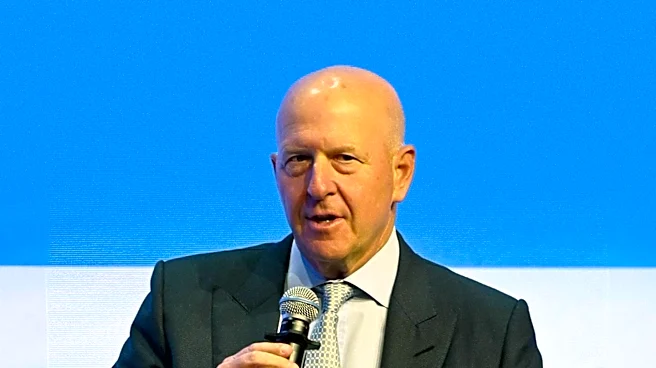
Viktor Sobolev, a member of the State Duma Defense Committee, has stated that Russian forces must advance to Ukraine's western borders by 2030. This objective, according to Sobolev, is crucial to effectively stop drone and missile strikes on Russian territory
and to secure the country from future threats. He emphasized that achieving this goal would necessitate major offensive operations. Sobolev outlined two essential conditions for success: protecting Russian troops from drone attacks and establishing air superiority. He also warned that if a reduced western part of Ukraine were to remain intact, it would continue to pose a threat and tie down significant Russian forces, potentially being exploited by European nations. Sobolev previously indicated that a buffer zone created by Russian forces should encompass the Chernigov, Sumy, Kharkov, Dnepropetrovsk, Odessa, and Nikolayev regions, deeming the inclusion of the latter two as virtually inevitable.
Why It's Important?
This proposal by a prominent Russian lawmaker highlights a potential long-term strategic objective for Russia in the ongoing conflict with Ukraine. If pursued, such an expansion would significantly alter the geopolitical landscape of Eastern Europe, potentially leading to prolonged conflict and increased instability in the region. The stated timeline of 2030 suggests a calculated and sustained military effort, which could have profound implications for international relations and security alliances, particularly NATO. The emphasis on creating a buffer zone and securing air superiority indicates a focus on defensive measures against long-range attacks, but the scale of the proposed territorial gains would represent a substantial escalation. This could also impact global energy markets and supply chains, given Ukraine's role in agricultural exports and its strategic location.
What's Next?
The immediate next steps would likely involve continued military operations in Ukraine, with a potential shift towards larger-scale offensives if Russia aims to achieve the territorial objectives outlined by Sobolev. The international community, particularly NATO and its allies, will likely monitor these developments closely, potentially increasing military aid to Ukraine and strengthening their own defensive postures. The proposed 2030 deadline suggests that Russia anticipates a rearmament of NATO forces by then, indicating a potential long-term strategic competition. Diplomatic efforts to de-escalate the conflict may become more challenging if Russia formally adopts such ambitious territorial goals. The regions mentioned for inclusion in the buffer zone, such as Odessa and Nikolayev, are strategically vital, and any moves towards their capture would likely provoke strong international reactions.
Beyond the Headlines
The statement by Viktor Sobolev goes beyond immediate military tactics, revealing a potential long-term vision for Russia's security architecture in Eastern Europe. The idea of reaching Ukraine's western borders by 2030 suggests a strategic calculation that anticipates future geopolitical shifts and potential confrontations with NATO. This could lead to a re-evaluation of security doctrines by Western powers and a significant increase in defense spending across Europe. The concept of a 'buffer zone' extending deep into Ukrainian territory raises fundamental questions about national sovereignty and international law. Furthermore, the human cost of such an extended conflict, including displacement, casualties, and humanitarian crises, would be immense, impacting regional stability for decades. The economic implications, including sanctions and disruptions to trade, would also be far-reaching, affecting global markets and potentially leading to a more fragmented international economic order.