
What's Happening?
The Marine Corps is facing a significant demand for amphibious ready groups (ARGs) from combatant commanders across various regions, as stated by Marine Commandant Gen. Eric Smith. During the Modern Day
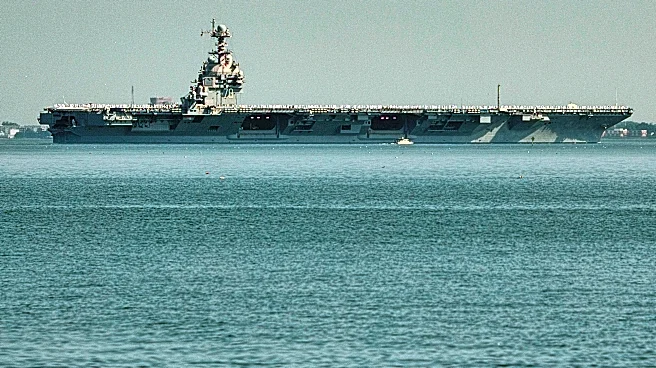
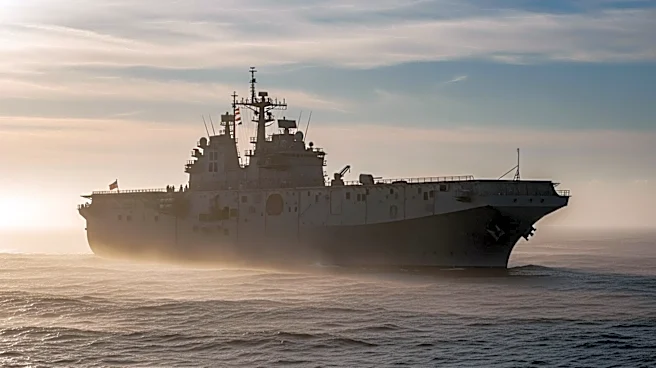
Marine conference, Smith emphasized that the demand for ARGs, which include Marine Expeditionary Units, far exceeds the current supply. The Navy's fleet of 32 amphibious ships is only partially deployable, with about half in good condition, according to a 2024 Government Accountability Office report. The Navy requires at least nine ships in deployable condition to maintain a 3.0 presence, but current numbers fall short. The Navy and Marine Corps are working to address these challenges by increasing the number of deployable ships and improving maintenance processes.
Why It's Important?
The shortage of deployable amphibious ships poses a risk to U.S. national security and operational readiness. The inability to meet the demand for ARGs could impact the U.S. military's ability to respond to global crises and maintain a strategic presence in key regions. This situation underscores the need for increased investment in naval infrastructure and maintenance to ensure that the U.S. can fulfill its defense commitments. The ongoing analysis and efforts to build more ships are crucial for maintaining military readiness and supporting international operations.
What's Next?
The Navy and Marine Corps are expected to continue their efforts to increase the number of deployable amphibious ships. This includes building new ships and addressing maintenance backlogs. The Amphibious Force Readiness Board is working to improve operational availability and reduce maintenance delays. The outcome of these efforts will be critical in determining the future capability of the U.S. military to meet global demands for ARGs.