


What's Happening?
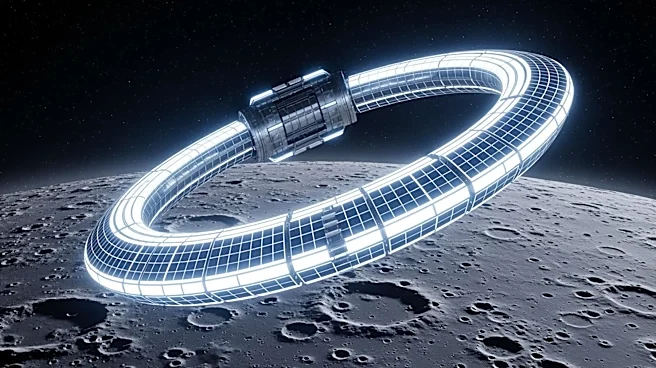
Japan is exploring an ambitious project to construct a solar ring around the Moon's equator, known as the Luna Ring, to provide continuous clean energy to Earth. This concept, proposed by the Shimizu Corporation, involves a 6,800-mile belt of solar panels
that would generate uninterrupted solar power, overcoming the limitations of terrestrial solar farms that are affected by weather and nightfall. The Luna Ring would convert sunlight into electricity, which would then be transmitted to Earth via microwave beams and high-energy lasers. This project gained attention following the Fukushima Daiichi nuclear disaster in 2011, which heightened Japan's interest in alternative energy sources. The proposal suggests using lunar resources and tele-operated robots for construction, minimizing the need to transport materials from Earth.
Why It's Important?
The Luna Ring project represents a significant shift towards sustainable energy solutions, potentially eliminating the need for fossil fuels. If successful, it could transform global energy infrastructure by providing a constant and reliable source of clean energy. This initiative could position Japan as a leader in space-based energy technology, offering a blueprint for future energy projects. However, the project faces substantial financial and technological challenges, including the high cost of development and the need for precise energy transmission over vast distances. Despite these hurdles, the project underscores the growing importance of innovative solutions in addressing global energy demands and environmental concerns.
What's Next?
The Luna Ring remains a conceptual project, with no secured funding or official endorsements from major space agencies like JAXA or NASA. The next steps would involve advancing the necessary technology, securing financial investment, and gaining international collaboration. The project's success depends on overcoming significant technical challenges, such as the accurate transmission of energy across space. Continued research and development are crucial to moving the project from concept to reality. The global energy landscape could see significant changes if the Luna Ring becomes operational, potentially influencing energy policies and international cooperation in space exploration and energy production.