







What's Happening?
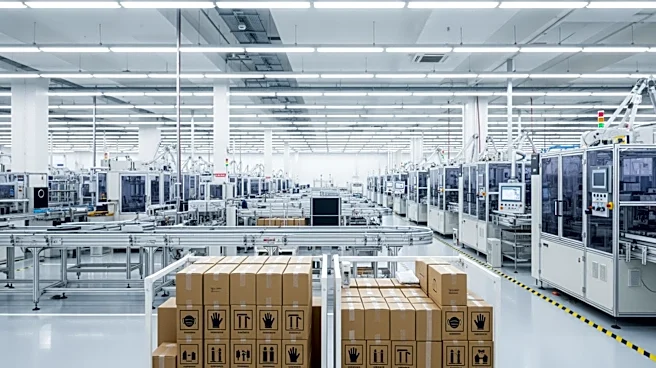
India's 'Make in India' initiative is showing positive results as the country's import dependence in key sectors such as electricals, chemicals, capital goods, and consumer durables has decreased. This development comes despite ongoing global supply chain
disruptions, particularly due to the West Asia crisis. A report by the Bank of Baroda highlights that while the overall import intensity of Indian companies has remained stable, specific sectors have seen a significant reduction in their import-to-net-sales ratios. For instance, the electricals sector's ratio dropped from 22.7% in FY19 to 13.7% in FY25. Similarly, the chemicals sector saw a decline from 27.5% to 22.5% over the same period. The report attributes these improvements to policy measures aimed at bolstering domestic manufacturing capabilities, such as the India Semiconductor Mission 2.0 and the development of Chemical Parks.
Why It's Important?
The reduction in import dependence is crucial for India's economic resilience, especially in the face of global commodity price fluctuations and supply chain disruptions. By decreasing reliance on imports, India can better shield its economy from external shocks, such as the recent rise in international crude oil prices and industrial metals. This shift towards self-reliance supports the country's broader economic goals and enhances its manufacturing sector's competitiveness. Additionally, it aligns with India's strategic initiatives to build robust supply chains and reduce vulnerability to global market volatility. The focus on domestic manufacturing not only strengthens the economy but also creates job opportunities and fosters innovation within the country.
What's Next?
India is expected to continue its efforts to reduce import dependence further, particularly in sectors that remain highly reliant on imports, such as industrial gases, non-ferrous metals, and crude oil. Policymakers may introduce additional measures to support domestic production and mitigate risks associated with global supply chain disruptions. Close monitoring of these sectors will be essential to ensure stability and growth. As India progresses with its 'Make in India' initiative, it may also explore new partnerships and investments to enhance its manufacturing capabilities and expand its presence in global markets.