







What's Happening?
The U.S. Court of Appeals for the District of Columbia has granted an administrative stay, allowing the continuation of construction on President Trump's White House ballroom project. This decision comes after a legal battle where U.S. District Judge
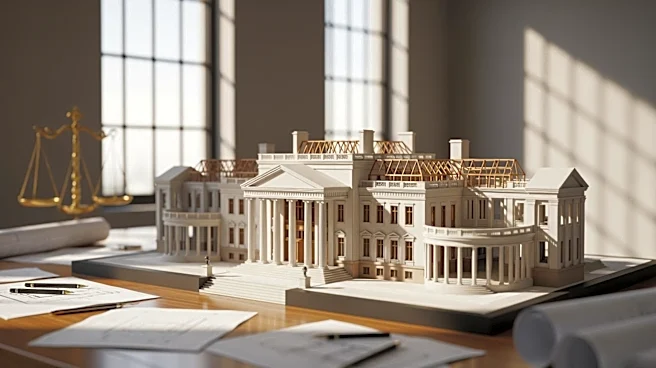
Richard Leon had previously halted the project, citing the need for congressional approval. The Trump administration argued that the ballroom, which includes bomb shelters and medical facilities, is vital for national security. The Justice Department supported this view, stating that halting construction could jeopardize national security. The project, which involves demolishing the East Wing to make way for a facility that can host 1,350 guests, is entirely funded by private donors and is estimated to cost $400 million. The National Trust for Historic Preservation had sued the White House, claiming that proper procedures were not followed, including failing to file plans with the National Capital Planning Commission.
Why It's Important?
The continuation of the ballroom project highlights ongoing tensions between the executive branch and judicial oversight regarding national security and procedural compliance. The case underscores the balance of power and the legal requirements for significant construction projects at the White House. The decision to allow construction to proceed, pending further hearings, reflects the court's consideration of national security arguments presented by the Trump administration. This development could set a precedent for how future administrations justify and execute large-scale projects under the guise of national security, potentially impacting how such projects are scrutinized and approved.
What's Next?
The next hearing is scheduled for June 5, where further arguments will be presented. The outcome could influence future legal interpretations of national security in relation to construction projects at government sites. Stakeholders, including the National Trust for Historic Preservation, are likely to continue their legal challenge, emphasizing the need for adherence to procedural norms. The decision could also prompt legislative discussions on the oversight of executive projects, potentially leading to new regulations or guidelines.