


What's Happening?
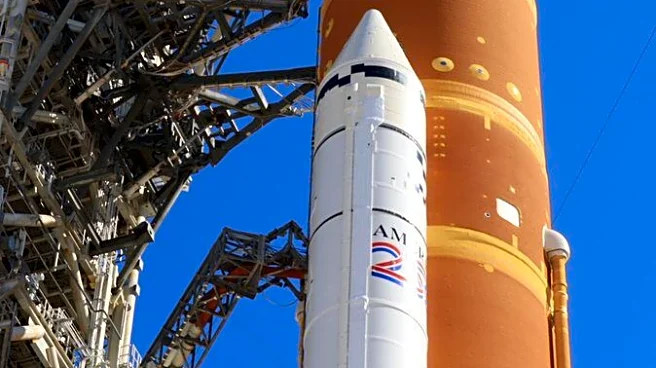
NASA has announced a delay in the Artemis II mission, initially scheduled for March, due to an issue with helium flow in the Space Launch System rocket's upper stage. This problem was discovered shortly after NASA set a March 6 launch date for the mission, which
aims to send astronauts around the moon. The helium flow is crucial for purging engines and pressurizing fuel tanks. NASA is considering returning the rocket to the hangar for repairs, which would push the launch to April at the earliest. This setback follows previous delays caused by hydrogen fuel leaks.
Why It's Important?
The delay in the Artemis II mission highlights the challenges of returning humans to the moon, a goal that has not been achieved since the Apollo program. The mission is a critical step in NASA's Artemis program, which aims to establish a sustainable human presence on the moon. Delays can impact timelines and budgets, affecting NASA's broader objectives for lunar exploration and future missions to Mars. The setback underscores the complexity of space missions and the need for rigorous testing and problem-solving to ensure safety and success.
What's Next?
NASA will focus on resolving the helium flow issue, either at the launch pad or by moving the rocket back to the Vehicle Assembly Building. The agency will continue to assess the situation and determine the best course of action to ensure a successful launch. The Artemis II mission's delay may also affect subsequent missions, including Artemis III, which aims to land humans on the moon by 2028. NASA will need to manage these timelines carefully to maintain momentum in its lunar exploration efforts.