








What's Happening?
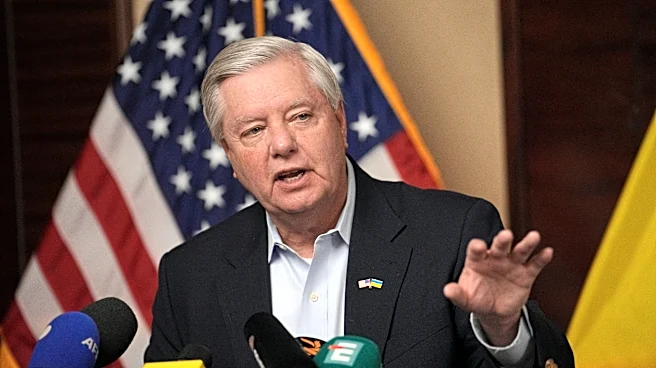
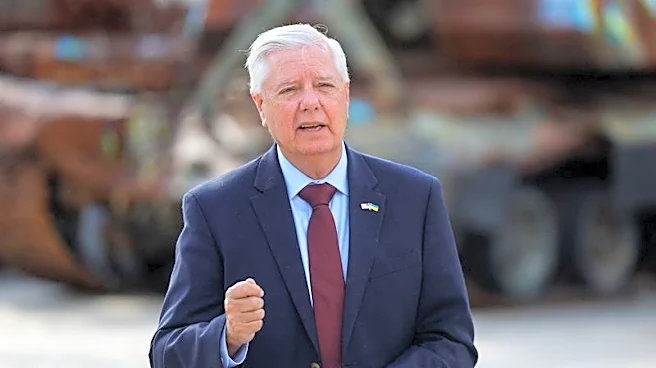
Senator Lindsey Graham's unexpected death has left Senate Republicans facing an uncertain future. Known as a 'bridge builder' and 'Trump whisperer,' Graham played a pivotal role in the Senate, often acting as a mediator and dealmaker. His ability to navigate
complex political landscapes and maintain relationships across party lines was a hallmark of his career. Graham's influence extended to his close relationship with President Trump, where he served as a key ally and advisor. His death leaves a significant gap in the Senate, particularly in terms of bipartisan cooperation and communication with the White House. Colleagues from both parties have expressed their admiration for Graham's ability to engage and collaborate, despite political differences.
Why It's Important?
Graham's death is significant due to his unique role in the Senate as a mediator and his close ties with President Trump. His ability to bridge divides and foster bipartisan cooperation was crucial in a politically polarized environment. Graham's influence in shaping U.S. policy, particularly in foreign affairs and national security, was substantial. His absence may lead to increased challenges in achieving bipartisan consensus on key issues. Additionally, his role as a conduit between the Senate and the White House will be difficult to replace, potentially impacting the effectiveness of communication and collaboration between the legislative and executive branches.
What's Next?
The Senate will need to address the leadership void left by Graham's passing. Identifying a successor who can continue his work in fostering bipartisan cooperation and maintaining communication with the White House will be crucial. The Republican Party may face challenges in finding a figure who can replicate Graham's unique ability to navigate complex political dynamics. In the short term, the Senate will need to manage ongoing legislative priorities without Graham's influence, which could impact the pace and outcome of policy discussions.