
What's Happening?
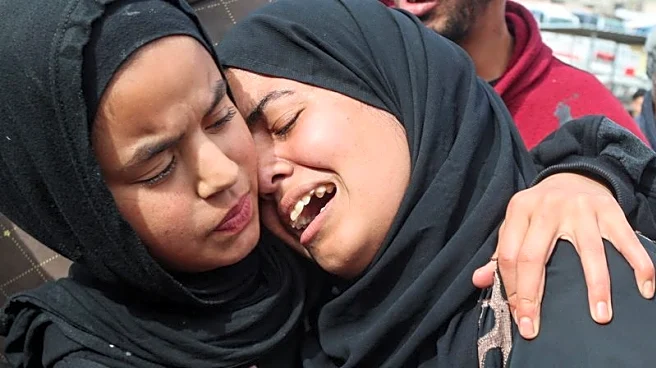
Israeli military strikes in Gaza have resulted in the deaths of at least 23 Palestinians, including children, marking one of the highest tolls since the October ceasefire. The strikes targeted various locations, including an apartment building in Gaza City
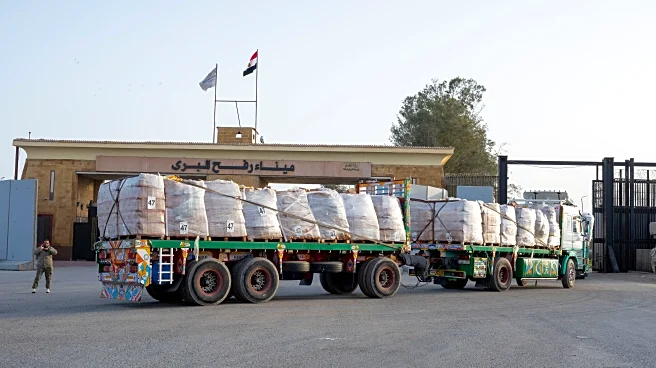
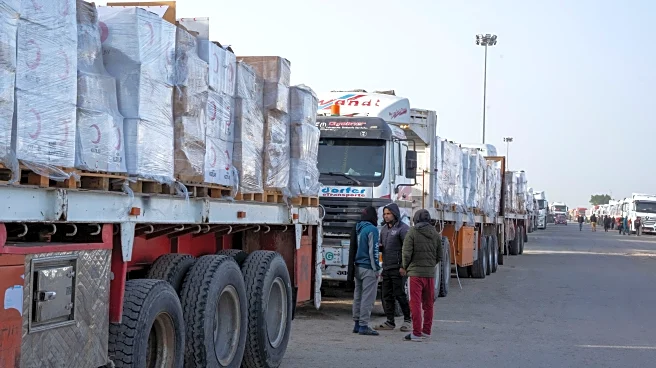
and a tent camp in Khan Younis. The Israeli military conducted these strikes in response to alleged ceasefire violations by Hamas. The strikes also hit a police station, resulting in the deaths of officers and inmates. The Rafah crossing, a critical point for humanitarian aid, is set to open soon, marking a significant step in the U.S.-brokered ceasefire agreement.
Why It's Important?
The escalation in violence highlights the fragility of the ceasefire agreement and the ongoing humanitarian crisis in Gaza. The strikes have exacerbated tensions and could potentially derail efforts to stabilize the region. The opening of the Rafah crossing is crucial for providing much-needed medical aid and supplies to Gaza, where infrastructure has been severely damaged. The international community, including the United States, plays a pivotal role in mediating peace and ensuring compliance with the ceasefire terms. The situation underscores the complex geopolitical dynamics and the urgent need for a sustainable resolution.
What's Next?
The opening of the Rafah crossing is anticipated to provide some relief to the residents of Gaza. However, the continuation of strikes and ceasefire violations could lead to further escalation. International mediators, including the United States, are likely to increase diplomatic efforts to maintain the ceasefire and address the humanitarian needs in Gaza. The situation remains volatile, with potential implications for regional stability and international relations.