





What's Happening?
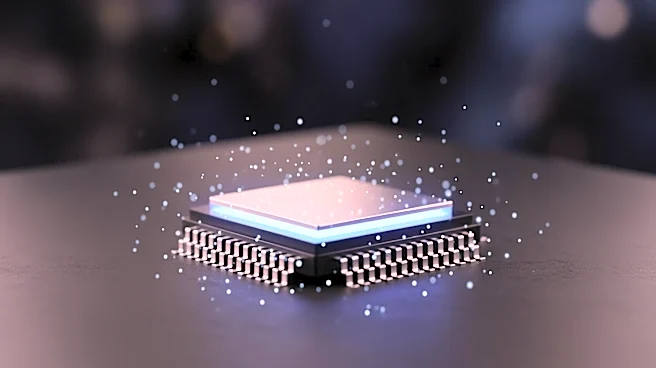
ADVACAM, a Czech company, is supplying six radiation-measuring chips for NASA's Artemis II mission. These chips are designed to assess cosmic radiation effects on astronauts and the Orion spacecraft's electronics. The technology, known as HERA (Hybrid
Electronic Radiation Assessor), has previously been tested aboard the International Space Station (ISS). With the sun at solar maximum, HERA acts as a warning system for solar flares, prompting the crew to minimize exposure by moving to the spacecraft's central area. The data collected aims to improve safety for future spaceflights by enhancing radiation shielding and reducing the risk of space debris caused by radiation damage.
Why It's Important?
The integration of ADVACAM's radiation chips in the Artemis II mission is crucial for advancing space exploration safety. By accurately measuring radiation exposure, the technology helps protect astronauts and spacecraft, ensuring mission success and longevity. This development is significant for the U.S. space industry, as it supports NASA's goal of establishing a sustainable human presence on the moon. Additionally, the data gathered could influence design decisions for future spacecraft, potentially reducing the risk of collisions and communication failures due to radiation damage. The broader impact extends to high-altitude flights, power grids, and communication systems reliant on space assets.
What's Next?
Following the Artemis II mission, the data collected by ADVACAM's chips will be analyzed to refine radiation shielding techniques for future missions. This could lead to improved spacecraft designs and enhanced safety protocols for astronauts. NASA and other space agencies may consider integrating similar technology into their missions, fostering international collaboration in space exploration. The findings could also influence policies regarding space debris management and radiation protection standards, contributing to safer and more efficient space travel.
Beyond the Headlines
The use of radiation-measuring technology in space missions highlights the growing importance of addressing cosmic radiation challenges. As space exploration advances, ethical considerations regarding astronaut safety and environmental impact become increasingly relevant. The development of effective radiation shielding not only protects human life but also preserves the integrity of space environments. This technological advancement may also inspire further research into radiation effects on biological systems, potentially leading to breakthroughs in medical and environmental sciences.