








What's Happening?
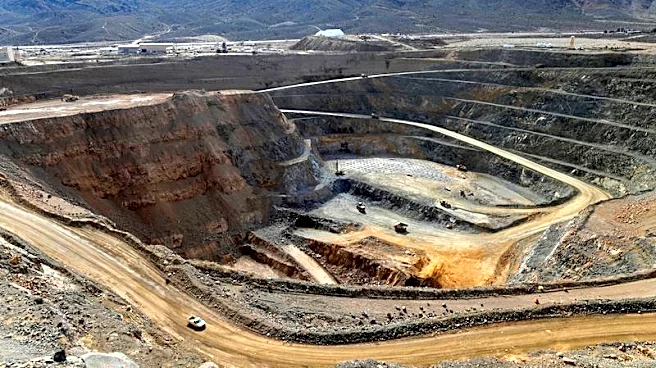
China is expanding the Bayan Obo mining complex in Inner Mongolia, increasing its annual mining capacity by 50%. The project primarily targets iron ore production, although Bayan Obo is the world's largest known rare earth deposit. The expansion involves
significant infrastructure upgrades and the implementation of intelligent mining systems. Despite the increased capacity, rare earth production remains governed by state quotas, limiting the amount of material that reaches global markets. This development occurs as the U.S. invests heavily in domestic critical minerals projects to reduce reliance on Chinese supply chains.
Why It's Important?
The expansion of Bayan Obo highlights China's continued dominance in the rare earth market, which poses a strategic challenge for the U.S. and other countries seeking to secure their own supply chains. While the U.S. is investing in domestic mining and processing capabilities, China's control over rare earth production and processing remains a significant advantage. The expansion underscores the importance of developing comprehensive supply chain strategies that include not only mining but also refining and manufacturing capabilities.
Beyond the Headlines
The expansion of Bayan Obo illustrates the complexities of global mineral supply chains, where mining capacity does not necessarily translate into increased production due to regulatory and economic factors. China's ability to control production through quotas and its dominance in processing infrastructure highlight the strategic challenges faced by countries like the U.S. in diversifying their supply sources. This situation emphasizes the need for international cooperation and investment in alternative supply chains to mitigate geopolitical risks.