







What's Happening?
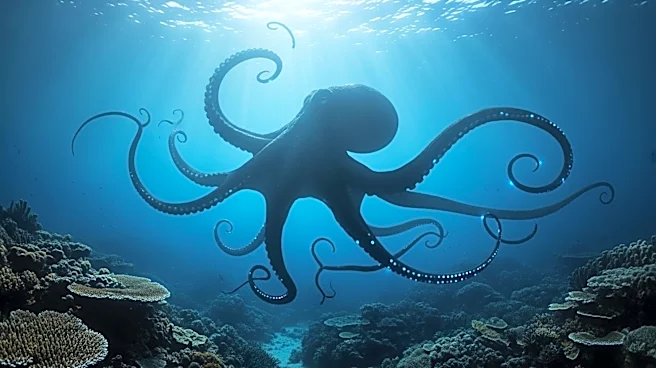
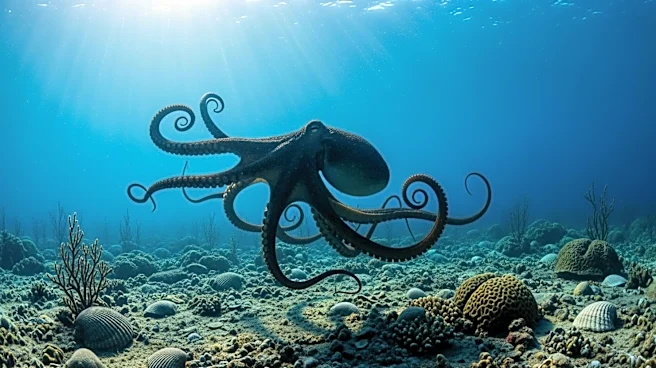
Researchers have uncovered fossilized remains of a giant octopus species from the Cretaceous period, which may have reached lengths of up to 19 meters. These octopuses were active predators, comparable to modern-day orcas and great white sharks in terms
of intelligence and hunting prowess. The study, led by Yasuhiro Iba at Hokkaido University, involved analyzing 27 large octopus jaws found in Japan and Canada. The findings suggest that these octopuses were among the largest invertebrates in Earth's history, with powerful jaws capable of processing hard materials. The research also indicates potential lateralization in jaw wear, hinting at complex behavior.
Why It's Important?
The discovery of these giant octopus fossils provides significant insights into the biodiversity and ecological dynamics of the Cretaceous oceans. Understanding the role of such apex predators helps scientists reconstruct ancient marine ecosystems and the evolutionary history of cephalopods. This research may also contribute to broader discussions on gigantism in marine species during the Cretaceous period, offering clues about environmental conditions that supported large predators. The findings could inspire further studies on the intelligence and behavioral complexity of ancient marine life, enhancing our knowledge of evolutionary biology.