




What's Happening?
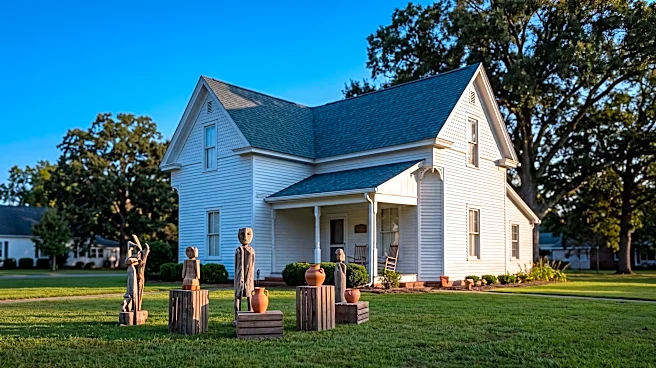
Black Wide-Awake, a platform dedicated to documenting historical and genealogical interests of Wilson County, North Carolina's African-American past, has revisited the property at 1306 East Nash Street. The article focuses on a 1980 photograph depicting
a display of wares in the front yard of Clarence B. Best's house-cum-atelier. The author reflects on their personal experience of passing the house numerous times during childhood and young adulthood without recalling this specific display. The property is situated within the East Wilson Historic District, specifically encompassing houses from 700-1407 E. Nash Street. This information is sourced from the Survey and National Register Branch of the State Historic Preservation Office, Department of Natural and Cultural Resources, Division of Archives and Records, Raleigh. The re-visitation serves to shed light on a specific moment in the history of the area and the life of one of its residents.
Why It's Important?
This re-examination of 1306 East Nash Street is important for several reasons, primarily in its contribution to the preservation and understanding of African-American history in Wilson County, North Carolina. By focusing on individual properties and their residents, Black Wide-Awake helps to humanize historical narratives and provide tangible links to the past. The mention of Clarence B. Best and his atelier offers a glimpse into the economic and social activities of African-Americans in the region during the late 20th century. Documenting such details is crucial for researchers and genealogists seeking to reconstruct family histories and community development. Furthermore, highlighting properties within the East Wilson Historic District underscores the architectural and cultural significance of these areas, ensuring that these historical assets are recognized and potentially protected for future generations. This initiative contributes to a broader effort to ensure that the contributions and experiences of African-Americans are accurately and comprehensively integrated into the historical record.
What's Next?
The ongoing work of Black Wide-Awake suggests a continued effort to uncover and share historical and genealogical information relevant to Wilson County's African-American community. Future endeavors will likely involve further research into other significant properties, individuals, and events within the region. This could include exploring additional photographs, archival documents, and oral histories to build a more complete picture of the past. The platform's engagement with its audience through comments and follow-ups indicates a commitment to fostering community involvement in historical preservation. This collaborative approach could lead to the discovery of new information and perspectives, enriching the historical narrative. The continued documentation of sites like 1306 East Nash Street will contribute to a growing repository of knowledge, serving as a valuable resource for both academic research and public education on local African-American heritage.
Beyond the Headlines
Beyond the immediate historical details of 1306 East Nash Street, this article touches upon the broader theme of historical memory and the importance of individual narratives in shaping collective understanding. The author's personal reflection on not remembering the display despite frequent passes highlights how easily everyday historical moments can be overlooked or forgotten without deliberate documentation. This underscores the critical role of initiatives like Black Wide-Awake in actively preserving and presenting these often-unrecorded aspects of history. The focus on a specific African-American individual and his property also challenges generalized historical accounts, providing a more nuanced and personal perspective on life in the East Wilson Historic District. This work contributes to a more inclusive historical record, ensuring that the diverse experiences and contributions of all community members are recognized and valued, fostering a deeper sense of identity and heritage within the community.