









What's Happening?
Pakistan has experienced a substantial increase in electricity demand, rising by 21% over two years leading up to the financial year 2025. This surge is attributed to the rapid expansion of distributed solar power, which has met all new electricity demand as traditional
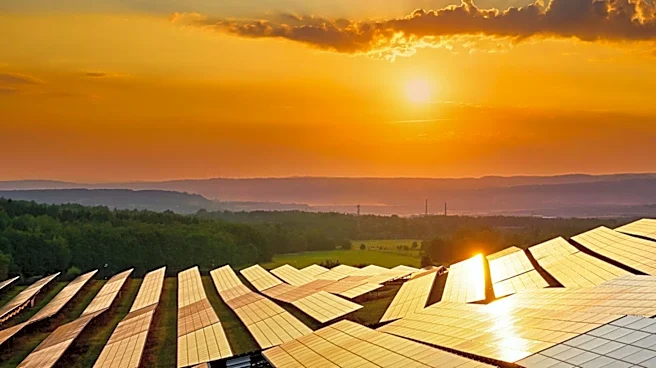
grid generation declined by 3%. According to a report by Ember and Renewables First, distributed solar generation increased from 15 terawatt-hours (TWh) in FY2023 to 51 TWh in FY2025, accounting for 28% of the country's electricity generation. The report highlights that distributed solar capacity reached 38 gigawatts (GW) by June 2025, with 27 GW installed in the past two years. This expansion has significantly increased electrification rates across various sectors, including residential, industrial, and commercial, with notable growth in electricity use for cooling equipment and other appliances.
Why It's Important?
The rapid growth of distributed solar power in Pakistan is reshaping the country's energy landscape, providing a more sustainable and cost-effective solution to meet rising electricity demands. This shift is crucial for reducing reliance on fossil fuels and mitigating the impact of high energy prices. The increased electrification rate, now close to the global average, indicates progress towards energy accessibility and sustainability. The expansion of solar power also supports economic growth by enabling businesses to manage power costs and reliability risks more effectively. Additionally, the transition to solar energy in agriculture, replacing diesel-powered systems, contributes to environmental benefits by reducing diesel consumption significantly.
What's Next?
As Pakistan continues to expand its distributed solar capacity, further developments in infrastructure and policy support are anticipated to sustain this growth. The government and energy stakeholders may focus on enhancing grid integration and addressing challenges related to transmission losses and theft. Continued investment in solar technology and incentives for solar adoption could further accelerate the transition to renewable energy. The success of Pakistan's solar boom may serve as a model for other countries facing similar energy challenges, potentially influencing regional energy policies and international collaborations in renewable energy development.
Beyond the Headlines
The shift towards distributed solar power in Pakistan highlights broader implications for energy security and climate change mitigation. By reducing dependency on fossil fuels, Pakistan is taking significant steps towards lowering its carbon footprint and contributing to global efforts to combat climate change. The expansion of solar energy also presents opportunities for job creation in the renewable energy sector, fostering economic development and innovation. However, the rapid growth of solar power necessitates careful planning to ensure grid stability and equitable access to energy resources across different regions and communities.