
What's Happening?
The Korean Coast Guard successfully rescued five crewmembers who went overboard from a cargo ship registered in Sierra Leone. The incident occurred off the southwest coast of Sepgwipo on Jeju Island. The Coast Guard received
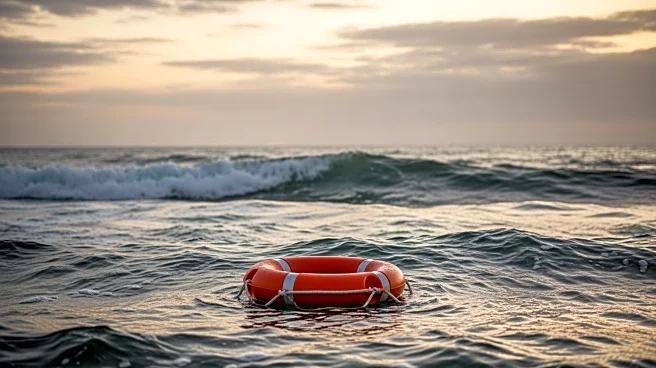
a distress call at approximately 4:45 p.m. local time, reporting that five individuals from the 8,580-ton vessel were in the water. Despite the ship not being in distress, the circumstances leading to the crew's fall into the sea remain unclear. The Coast Guard, along with a navy vessel and a ship from the South Sea Fisheries Management Service, responded promptly by dispatching five patrol boats, two rescue boats, and a helicopter. By 5:30 p.m., all five crewmembers were found in a life raft and were subsequently airlifted to a local hospital for medical evaluation. The investigation into how the crewmembers ended up overboard is ongoing.
Why It's Important?
This rescue operation underscores the critical role of the Korean Coast Guard in ensuring maritime safety and responding to emergencies at sea. The incident highlights the potential risks faced by seafarers, even when vessels are not in distress. The swift response by multiple agencies demonstrates the importance of coordinated efforts in maritime rescue operations. This event may prompt a review of safety protocols and emergency preparedness on cargo ships, particularly those operating in challenging weather conditions. The investigation's findings could lead to improved safety measures, benefiting the shipping industry and enhancing the safety of maritime workers.
What's Next?
The ongoing investigation by the Korean Coast Guard will seek to determine the cause of the incident and whether any safety regulations were breached. The findings could influence future maritime safety policies and training programs for crewmembers. Additionally, the incident may lead to increased scrutiny of cargo ship operations, especially those registered under foreign flags. Stakeholders in the maritime industry, including shipping companies and regulatory bodies, will likely monitor the investigation's outcomes to implement necessary changes and prevent similar occurrences.