



What's Happening?
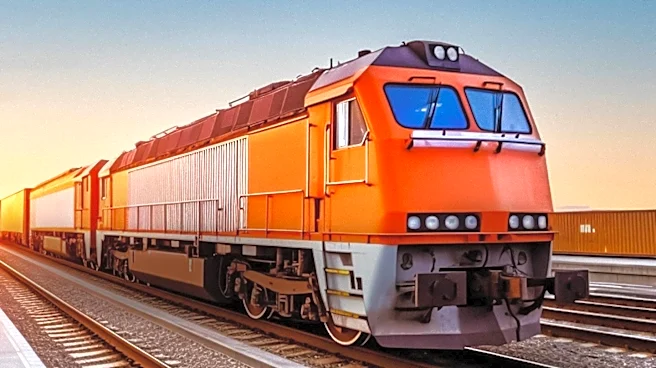
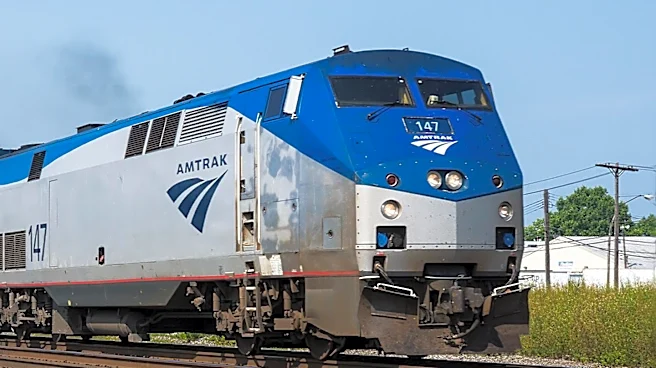
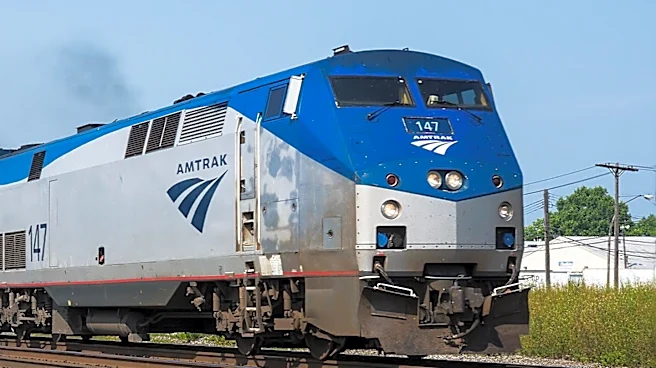
Amtrak's Acela service provides a premium, high-speed rail option for travelers between Washington, D.C., and New York City. This flagship service utilizes specialized equipment and dedicated track segments to achieve faster travel times compared to the
more budget-friendly Northeast Regional service. While Acela trains are designed to reach speeds up to 150 mph, these top speeds are currently limited to specific short sections of the route. Passengers choosing Acela benefit from enhanced amenities, including more spacious seating, quieter cars, and upgraded dining options. The primary stations for this route are Washington Union Station in D.C. and Penn Station in Midtown Manhattan, both serving as major transportation hubs. The Acela service is positioned as a competitive alternative to driving and flying, offering city-center to city-center convenience and a predictable schedule.
Why It's Important?
The Acela service plays a significant role in connecting two of the United States' most important cities: the political capital, Washington, D.C., and the financial and cultural hub, New York City. Its premium offerings cater to business travelers and others seeking efficiency and comfort, impacting regional commerce and connectivity. The existence of a high-speed rail option influences travel decisions, potentially reducing reliance on air travel and personal vehicles for this corridor. This service highlights ongoing discussions about infrastructure investment in the Northeast Corridor, with proposed upgrades to signaling, track realignment, and high-speed segments aiming to further reduce travel times and enhance the attractiveness of rail travel. Such improvements could foster regional economic growth and provide more environmentally conscious travel options, benefiting both individual travelers and the broader U.S. transportation network.
What's Next?
Ongoing infrastructure discussions in the Northeast Corridor suggest potential future enhancements for the Acela service. Proposed upgrades, including improvements to signaling, track realignment, and the expansion of high-speed segments, are being considered. These developments aim to further reduce travel times and increase the frequency of service, making train travel between D.C. and NYC an even more appealing option. Such advancements could lead to a greater shift in traveler preferences towards rail, especially for those prioritizing speed, convenience, and environmental considerations. The continued investment in high-speed rail infrastructure could also stimulate regional economic growth by facilitating easier and faster movement of people between key urban centers.
Beyond the Headlines
The Acela service represents more than just a mode of transportation; it embodies a broader conversation about the future of intercity travel in the U.S. Its premium pricing and amenities reflect a market segment willing to pay for efficiency and comfort, contrasting with the more economical Northeast Regional. This dynamic underscores the diverse needs within the travel market and the challenges of balancing cost, speed, and luxury in public transportation. Furthermore, the emphasis on city-center to city-center travel highlights a key advantage of rail over air travel, which often involves time-consuming commutes to and from airports. The ongoing infrastructure debates surrounding the Northeast Corridor also touch upon the long-term vision for sustainable and efficient transportation systems in densely populated regions, with implications for urban planning, environmental policy, and economic development.