



What's Happening?
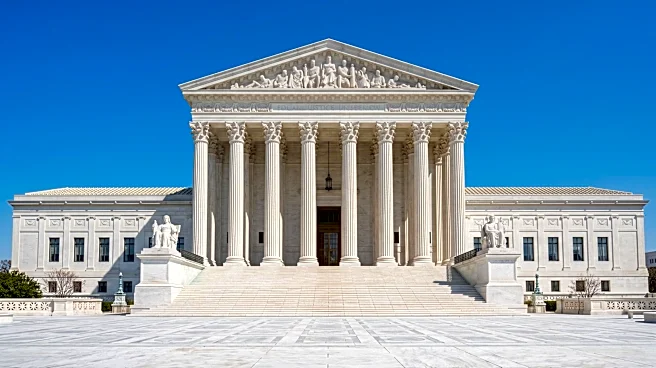
The Supreme Court has granted an emergency appeal from Republicans regarding campaign-ad prices, effectively clearing a legal obstacle for political parties to secure cheaper TV ad time before the midterm elections. This decision temporarily halts a lower-court
ruling that favored Democratic candidates, including Senator Jon Ossoff of Georgia and former Senator Sherrod Brown of Ohio. These Democrats had argued that discounted broadcast ad rates should be exclusively for candidates. The Federal Communications Commission’s Media Bureau had previously stated that certain party-coordinated ads were also eligible for these lower prices. The National Republican Congressional Committee and National Republican Senatorial Committee sought the Supreme Court's intervention, citing that broadcasters were already charging them higher rates and disrupting their planned budgets following the appeals-court decision. The majority of justices agreed that the lower court's order was premature.
Why It's Important?
This Supreme Court decision holds significant importance for the upcoming midterm elections and campaign finance. By allowing political parties to access cheaper TV ad rates, it could provide a substantial financial advantage to the Republican Party, which reportedly has a considerable cash advantage nationally. This access to more affordable advertising can enable parties to reach a wider electorate, potentially influencing voter perception and turnout. The ruling also highlights the ongoing legal battles surrounding campaign finance regulations and the interpretation of federal laws governing political advertising. It underscores the critical role of the Supreme Court in shaping the electoral landscape, especially in the lead-up to pivotal elections. The ability to broadcast more ads at a lower cost could impact the competitiveness of races across the country, affecting both federal and state-level contests.
What's Next?
Following this emergency ruling, the Republican committees are expected to file a more comprehensive appeal. The Supreme Court's decision to halt the lower-court ruling is temporary, meaning the legal dispute over TV ad rates is not fully resolved. The Federal Communications Commission (FCC) may also continue its internal review process regarding these regulations. In the immediate term, political parties, particularly the Republican Party, will likely adjust their advertising strategies to leverage the newly available cheaper ad rates, potentially increasing their media presence in critical swing states. Democratic candidates and committees will need to adapt their own strategies in response to this development. The ongoing legal proceedings and the FCC's final determination will ultimately shape the long-term rules for political advertising costs, impacting future election cycles.
Beyond the Headlines
This ruling delves into the deeper implications of campaign finance and free speech in the context of modern elections. The debate over who qualifies for discounted ad rates touches upon the fundamental question of how political messages are disseminated and who has the financial capacity to influence public opinion. The decision could exacerbate concerns about the role of money in politics, potentially leading to calls for campaign finance reform. It also highlights the power of judicial intervention in electoral processes, where a single court decision can significantly alter the playing field. Furthermore, the case underscores the evolving nature of media and advertising in political campaigns, as parties continuously seek to maximize their reach and impact. The long-term effect could be a re-evaluation of existing campaign finance laws to ensure fairness and transparency in political communication.