





What's Happening?
China is on track to become the world's leading nuclear energy producer within the next decade, surpassing both France and the United States. This projection comes from analysts like Damien Ma, energy lead analyst for Gavekal Technologies, who notes China's
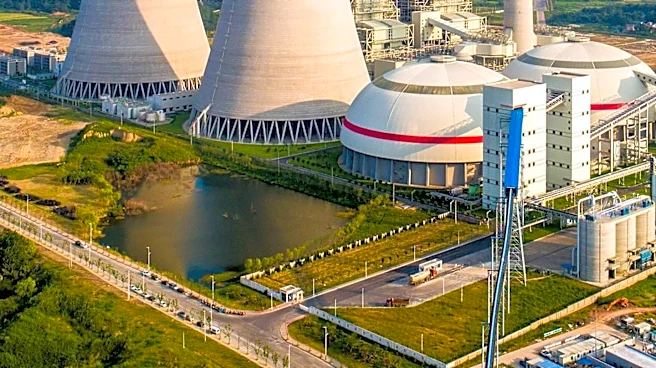
rapid expansion in nuclear capacity. Over the past decade, China has added 34 gigawatts of nuclear capacity, while the U.S. has only brought one new plant online, Georgia's Plant Vogtle. China's latest five-year plan indicates a continued aggressive build-out of its nuclear sector, emphasizing innovation and security. Beijing is also emerging as a global leader in advanced nuclear power technologies, including high-temperature gas-cooled reactors (HTGRs). In a notable move, China recently signed a deal with the International Atomic Energy Agency (IAEA) to share its expertise on HTGRs with other countries, covering research, development, design, construction, and operation, as well as information exchange on supply chains and personnel training.
Why It's Important?
China's ascendancy in nuclear energy has significant implications for global energy markets, technological leadership, and climate change mitigation efforts. Its rapid development and deployment of advanced nuclear technologies could set new international standards and influence future energy strategies worldwide. For the United States, this development highlights a potential shift in global energy dominance and technological competitiveness. While the U.S. has historically been a leader in nuclear energy, its slower pace of new plant construction and development of next-generation reactors contrasts sharply with China's accelerated progress. This could impact the U.S.'s ability to shape international nuclear policy and export its own nuclear technology. Furthermore, the increasing demand for power, particularly from artificial intelligence, makes advanced nuclear energy a critical component for providing clean, 24/7 energy, and China's leadership in this area could give it a strategic advantage in addressing future energy needs.
What's Next?
The agreement between China and the IAEA to share HTGR knowledge suggests a potential for increased international collaboration in nuclear energy development, particularly for countries interested in advanced reactor designs. This could accelerate the global adoption of these technologies, offering new avenues for clean energy production. For the United States, the situation may prompt a re-evaluation of its own nuclear energy strategy, potentially leading to increased investment in advanced reactor research, development, and deployment to maintain competitiveness. The focus will likely be on how other nations, particularly those in Europe and Asia, engage with China's nuclear offerings and whether this leads to a broader shift in global nuclear energy partnerships. The long-term impact will depend on the successful implementation and safety record of these advanced reactors, as well as the geopolitical dynamics surrounding nuclear technology transfer and energy independence.
Beyond the Headlines
Beyond the immediate economic and technological implications, China's rise in nuclear energy leadership touches upon deeper geopolitical and environmental considerations. The sharing of HTGR technology, while potentially beneficial for global clean energy goals, also raises questions about nuclear proliferation and safety standards, especially as more countries gain access to advanced nuclear capabilities. This development could reshape international alliances and influence global energy security dialogues. Environmentally, the widespread adoption of advanced nuclear energy, if managed responsibly, could play a crucial role in combating climate change by providing a reliable, low-carbon power source. However, it also necessitates robust international regulatory frameworks and safeguards to ensure the safe and secure deployment of these powerful technologies. The shift in nuclear energy leadership could also influence the broader energy transition, potentially accelerating or altering the pathways to a global low-carbon future.