







What's Happening?
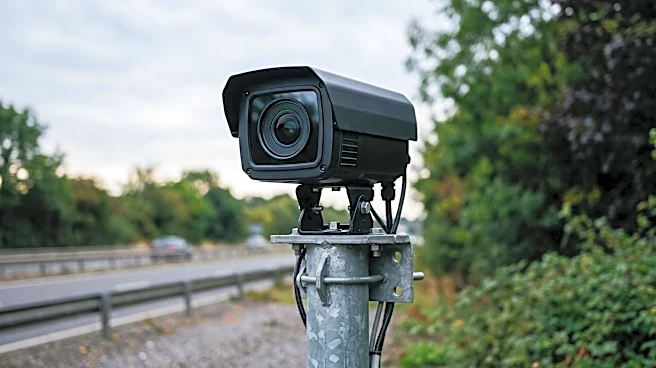
Oklahoma lawmakers are conducting an interim study on the widespread use of Flock license plate reader cameras across the state, prompted by Senator Mary Boren, D-Norman. The study, held by the Public Safety Committee, addresses growing concerns regarding
the Fourth Amendment, law enforcement practices, and mass surveillance. Dr. Michael Wilds, an attorney and professor at Northeastern State University, testified that current Oklahoma law permits automated license plate readers (ALPRs) solely for identifying uninsured motorists. He stated that law enforcement agencies exceed their legal authority and violate state law when using this technology to track travel patterns beyond insurance verification. Representative Tom Gann, R-Inola, supported this interpretation, noting that previous testimony from the District Attorneys Council indicated the technology's original intent was limited to insurance verification, not creating searchable databases of movement. Chad Marlow, senior policy counsel for privacy and technology at the American Civil Liberties Union, highlighted the risks to privacy, civil rights, and civil liberties, citing high error rates in national databases and the potential for the government to infer intimate details about individuals' lives. He argued that bans offer the strongest protection against AI-enabled, ALPR-driven mass government surveillance.
Why It's Important?
This legislative review is crucial for balancing public safety with individual privacy rights in Oklahoma. The rapid deployment of Flock cameras and similar ALPR technology raises fundamental questions about the scope of government surveillance and its impact on Fourth Amendment protections against unreasonable searches. If law enforcement is using these cameras beyond their legally defined purpose—specifically, for general tracking rather than just insurance verification—it could constitute a significant overreach of power and a violation of citizens' constitutional rights. The debate highlights the tension between the desire for enhanced crime-fighting tools and the imperative to safeguard civil liberties. The potential for high error rates in ALPR systems and the creation of vast, searchable databases of citizens' movements could lead to misidentification, false accusations, and the chilling effect of constant surveillance on free expression and association. Clarifying the legal boundaries for ALPR use is essential to prevent potential abuses and ensure that technological advancements do not erode foundational legal protections.
What's Next?
The interim study by the Public Safety Committee is a preliminary step, and the discussions are expected to continue. Senator Boren emphasized the need to clarify the permitted use of ALPRs under both Oklahoma law and constitutional law, suggesting that without such clarification, defense counsel might identify significant weaknesses in the use of data collected by these systems. This indicates that legislative action, potentially in the form of new bills or amendments to existing statutes, could be proposed in future sessions to either restrict or more clearly define the use of Flock cameras and similar technologies. Law enforcement agencies, civil liberties advocates, and technology providers will likely continue to engage in this debate, advocating for their respective positions. The outcome could lead to stricter regulations on data collection and retention, enhanced oversight mechanisms, or even outright bans on certain applications of ALPR technology in Oklahoma.
Beyond the Headlines
The debate over Flock cameras in Oklahoma is part of a larger national conversation about the ethical and legal implications of surveillance technology in a digital age. The ability of ALPRs to create persistent, searchable records of everyone's movements without a constitutionally adequate basis touches upon the very definition of privacy in modern society. This technology, while ostensibly designed for public safety, has the potential to transform the relationship between citizens and the state, shifting towards a model of pervasive monitoring. The discussion also highlights the challenges of adapting existing legal frameworks, such as the Fourth Amendment, to rapidly evolving technologies. The testimony regarding the potential for ALPRs to infer intimate details about a person's life—including religious beliefs, political activity, and personal relationships—underscores the profound societal implications of unchecked surveillance. This issue extends beyond legal technicalities, touching on fundamental questions of trust, freedom, and the kind of society we wish to build.