







What's Happening?
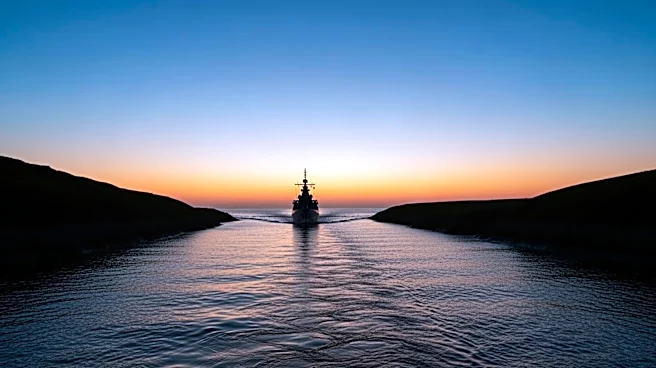
The U.S. has intensified its naval operations in the Strait of Hormuz, resulting in increased commercial ship traffic despite ongoing tensions with Iran. Reports indicate that nearly 1,000 commercial vessels have transited the strait in recent months,
a significant increase from previous estimates. This uptick in activity comes as the U.S. Navy has been conducting mine-clearing operations and providing guidance to ships navigating the strait, which is a critical chokepoint for global oil supplies. The U.S. Central Command has been actively involved in ensuring the safe passage of ships, using radar, drones, and other tools to monitor and advise vessels. Despite a ceasefire, the region remains volatile, with recent incidents involving Iranian attacks on ships and U.S. military responses.
Why It's Important?
The Strait of Hormuz is a vital artery for global oil transportation, and any disruption can have significant implications for the global economy. The U.S. naval presence aims to ensure the free flow of commerce and counter Iranian attempts to control the strait. This situation underscores the strategic importance of the region and the potential for conflict to impact global oil markets. The increased traffic through the strait, facilitated by U.S. operations, suggests a shift towards a new normal where commercial shipping continues despite the risks. This development highlights the ongoing geopolitical tensions and the U.S.'s role in maintaining stability in the region.
What's Next?
The situation in the Strait of Hormuz is likely to remain tense, with potential for further confrontations between U.S. and Iranian forces. The U.S. may continue to enhance its naval presence to deter Iranian aggression and ensure the safety of commercial vessels. The international community will be closely monitoring the situation, as any escalation could have broader implications for global energy markets. Ship operators may increasingly rely on U.S. guidance to navigate the strait, while diplomatic efforts to de-escalate tensions could be pursued by various stakeholders.
Beyond the Headlines
The ongoing tensions in the Strait of Hormuz reflect broader geopolitical dynamics, including the U.S.-Iran relationship and regional power struggles. The U.S.'s involvement in ensuring the free flow of commerce highlights its strategic interests in the region. This situation also raises questions about the long-term sustainability of relying on the Gulf for a significant portion of the world's oil supply. As the global energy landscape evolves, countries may seek to diversify their energy sources to reduce dependency on volatile regions.