
What's Happening?
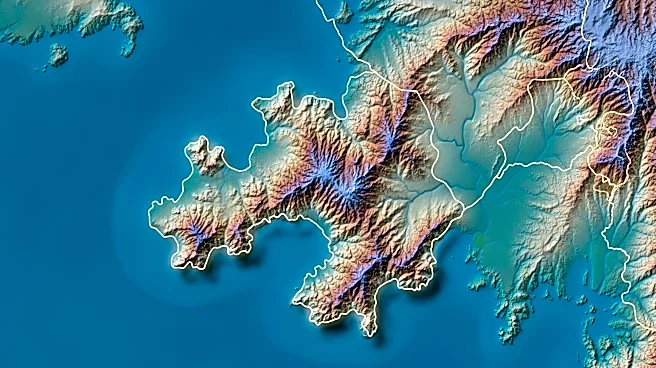
Israel's geographical characteristics and small size have been central to its ongoing conflicts with neighboring countries. According to Steven E. Zipperstein, an assistant adjunct professor at UCLA, Israel's compact
geography makes it both defensively agile and highly vulnerable. The country, comparable in size to New Jersey, is densely populated with about 9.3 million people. This density allows for rapid military mobilization but also means that Israeli cities are susceptible to quick and damaging attacks, such as the recent rocket fire from Gaza. The proximity to hostile borders means that residents often have mere seconds to seek shelter during attacks. Despite technological advancements like the Iron Dome, Israel's adversaries have adapted to exploit its geographical constraints.
Why It's Important?
The geographical and demographic realities of Israel have significant implications for its national security and regional stability. The country's small size and high population density make it a prime target for attacks, which can escalate tensions and lead to broader conflicts. This vulnerability necessitates a constant state of readiness and has led to the development of advanced defense systems. However, the ongoing adaptation by adversaries like Hamas underscores the persistent threat to Israeli security. The situation affects not only military strategies but also the daily lives of Israeli citizens, who must remain vigilant and prepared for sudden attacks. The geopolitical dynamics in the region are heavily influenced by these factors, impacting international relations and peace efforts.
What's Next?
Israel is likely to continue enhancing its defense capabilities, including further development of the Iron Dome and other technological measures. Diplomatic efforts may also intensify to address the underlying causes of the conflict and seek long-term solutions. The international community, including the United States, may play a role in mediating discussions and providing support for peace initiatives. However, the entrenched positions of both Israel and its adversaries suggest that achieving lasting peace will be challenging. The situation remains fluid, with potential for both escalation and diplomatic breakthroughs.
Beyond the Headlines
The ongoing conflict in Israel highlights broader issues of territorial disputes and the challenges of maintaining security in densely populated areas. The ethical implications of military actions in such environments are significant, as civilian populations are often caught in the crossfire. Additionally, the cultural and historical context of the region adds layers of complexity to the conflict, influencing public opinion and policy decisions. Long-term shifts may include changes in regional alliances and the role of international organizations in conflict resolution.