
What's Happening?
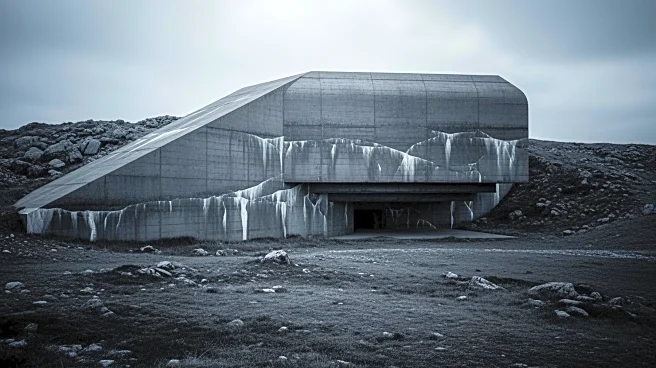
Estonia has initiated the construction of concrete bunkers along its border with Russia, as part of a broader effort by NATO's eastern flank nations to bolster land defenses. This development follows a January
2024 agreement among the Baltic states—Estonia, Latvia, and Lithuania—to enhance border security against potential threats from Russia and Belarus. The initiative, known as the Baltic Defense Line, includes a network of bunkers, support points, and distribution lines. Estonia plans to install 28 bunkers by the end of 2025, with the first set to be located on the southeastern border. The project, however, has faced delays, with completion now expected by the end of 2027. The Baltic states are also considering dismantling railways linking them to Russia and Belarus as part of their defense strategy.
Why It's Important?
The construction of these bunkers is a significant step in strengthening NATO's eastern defenses amid concerns over potential Russian aggression. Intelligence assessments suggest that Russia could launch an attack on a NATO member in the coming years, prompting these nations to act swiftly. The Baltic states, along with Poland, have increased defense spending to prepare for any potential threats. This move not only aims to protect the region but also serves as a deterrent against any small-scale land grabs by Russia. The initiative underscores the urgency felt by these countries to secure their borders and ensure the safety of their citizens.
What's Next?
As the construction of the bunkers progresses, Estonia and its Baltic neighbors will continue to evaluate and enhance their defense strategies. The completion of the Baltic Defense Line will likely involve further infrastructure developments, such as anti-tank fortifications and multi-stage defenses. Additionally, the potential dismantling of railways could further isolate Russia and Belarus, impacting regional logistics and trade. The ongoing efforts will require continued investment and collaboration among the Baltic states to ensure the effectiveness of their defense measures.